The Conjugate Method uses three strength-training methods: maximal, dynamic, and repeated effort. Combining these methods allows athletes to address and improve multiple strengths and athletic traits simultaneously. This results in athletes making and maintaining strength and athletic performance gains much more efficiently than with other approaches to strength training.
While the dynamic and repeated effort methods play critical roles in our training style, the maximal effort method has the greatest impact. This is because maximal effort training directly trains and improves the most vital of all strengths: absolute strength.
Absolute strength dictates the peak force output of an athlete and increases the capacity of all other strengths to improve. It’s simple: a stronger athlete will have a higher capacity to improve explosive power, speed, and work capacity. While some believe in performance plateaus, we at Westside know it is just a matter of needing to specifically address absolute strength, something many coaches steer clear of.
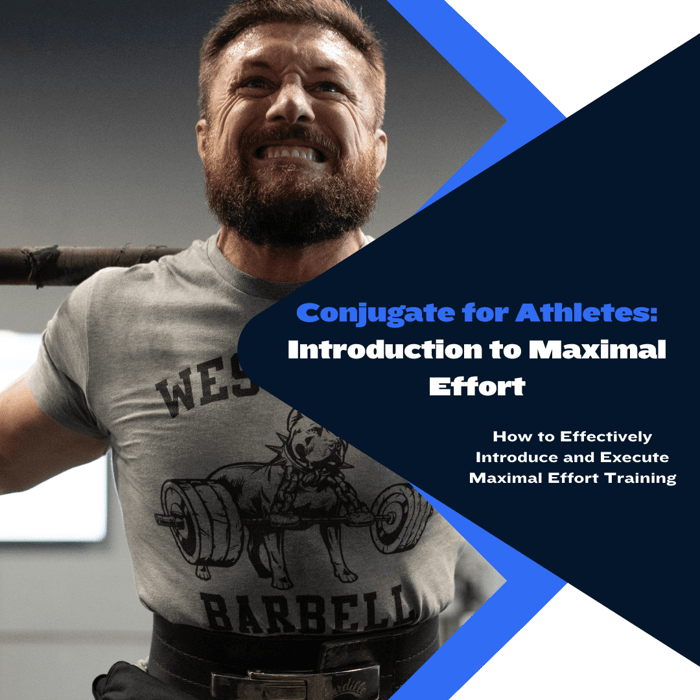
As the name implies, maximal effort training is performed at high intensity. This means that athletes will work up to a top-set single (or a set of 3 with good mornings), aiming to lift the heaviest weight they can on that specific training day. As long as we meet or exceed 90% of training intensity, we can efficiently improve absolute strength.
Maximal effort training is often confused with what is called “maxing out”. In powerlifting, we specifically peak for competition by tapering our training and timing a rest period before the competition. The lifts that occur at competition would be considered “maxing out”.
However, our goal on maximal effort training days is to lift the heaviest weight we can safely lift that day, given current training fatigue levels. Outside of our basic rest and recovery protocol, we are not employing any specific strategy to peak for this training day. Coaches and athletes must understand this.
One thing that critics of max effort training will mention is the risk of injury. However, we know that maximal effort training improves bone and tissue density. While we cannot outright prevent injury, we can train in ways that lead to specific adaptations that result in more durable, resilient athletes.
At Westside, our athletes perform maximal effort training twice per week, targeting the lower and upper body. In this article, we will discuss our basic approach to maximal effort training on each of these training days.
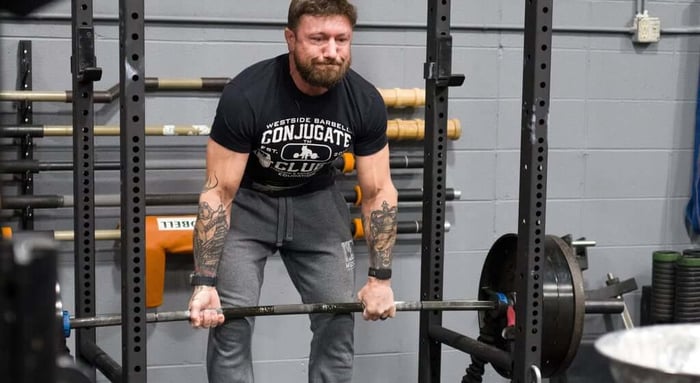
Maximal Effort Lower for Athletes
Improving the absolute strength of the lower body is critical in the training of any athlete. Strengthening the lower body anterior and posterior chains is essential for improving foot speed and acceleration, jumping ability, deceleration, change-of-direction speed, and overall lower-body durability.
Whether an athlete is on a football field, a basketball court, or a grappling mat, having a high level of absolute lower-body strength will improve sports performance and reduce the risk of injury.
At Westside, we typically use three lower-body exercises as our “base” exercises. This includes the squat, deadlift, and good morning exercises. From these base exercises, we can create many variations to introduce different training stimuli and elicit specific training adaptations.
However, this level of exercise selection specificity is reserved for athletes with experience in Conjugate training. If we are dealing with an athlete new to our style of training, we stick with simple variations first, then move on to more advanced variations as training dictates and the athlete's movement skills allow.
Here is an example of what would be considered an introductory-level maximal effort lower exercise rotation:
Month A
Week 1 – Barbell Squat
Week 2 – Sumo Deadlift
Week 3 – Box Squat
Week 4 – Giant Cambered Bar Good Morning
As you can see in month A, we are sticking to basic movements. The squat and deadlift movements would be performed for a top-set single, while the good morning exercise would work up to a top-set of three reps.
Month B
Week 1 – Front Squat
Week 2 – 2” Deficit Deadlift
Week 3 – Box Squat vs. Chain
Week 4 – SSB Good Morning
In month B, we introduce a slight variation to the mix, but still stick to basic exercise variations. Similar to our approach in month A, the good morning exercise will be performed for a top set of three reps.
We will execute this training in an ABAB pattern. As for changing the exercise selection, we could run this pattern for up to 24 total weeks before needing to change the selected movements. However, it is always essential to evaluate athletes as a change could be called for before the 24-week point.
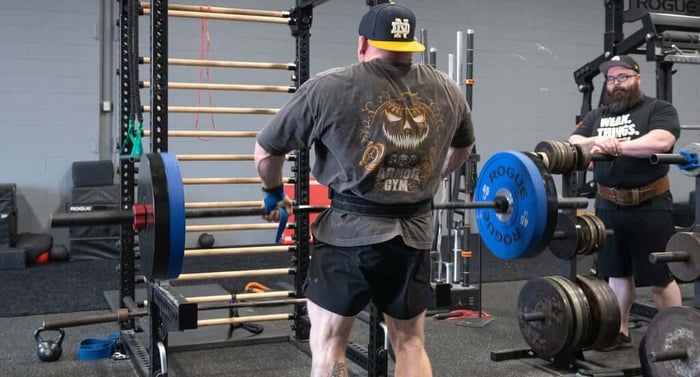
Maximal Effort Upper for Athletes
The goal of maximal effort upper-body training is to improve the absolute strength of the upper torso and arms. This results in athletes not only improving their pressing strength, but also their ability to use the upper torso and arms during explosive sports movements. Additionally, athletes will improve their durability and be more resistant to wrist, elbow, shoulder, and pec injuries.
A running back with stronger arms can hold onto the ball better, a grappler with stronger arms can force submissions, and a basketball player with stronger arms will be able to make plays at the basket with authority. No matter the sport, a stronger upper torso and arms are always a benefit.
When selecting max effort upper exercises, we will choose a mix of horizontal and vertical pressing patterns, biasing towards horizontal movement slightly. Similar to our approach during max effort lower, we will stick with a somewhat simple exercise selection in the first month, then add some slight variation during the second month.
Here is what would be considered a reasonable maximal effort upper exercise rotation for an athlete new to Conjugate:
Month A
Week 1 – Bench Press
Week 2 – Close-Grip Bench Press
Week 3 – Push Press
Week 4 – Incline Bench Press
The goal during month A is to execute basic press movements so athletes can begin building strength and competency to move on to the slight variations featured in month B. As you can see, we change up the grips and the pressing angle, but we keep the movements basic.
Month B
Week 1 – Bench Press vs. Bands
Week 2 – Football Bar Bench Press
Week 3 – Z Press
Week 4 – Pin Press (2-board level)
As you can see, we go with a bit more variation in month B. Accommodating resistance is added, as are specialty bars and exercises focused on specifc ranges of motion.
We will follow the same ABAB pattern as mentioned in the maximal effort lower section. This can be done for up to 24 weeks before the variations would need to change. However, again, we must constantly monitor the athlete's progress and make changes as required.
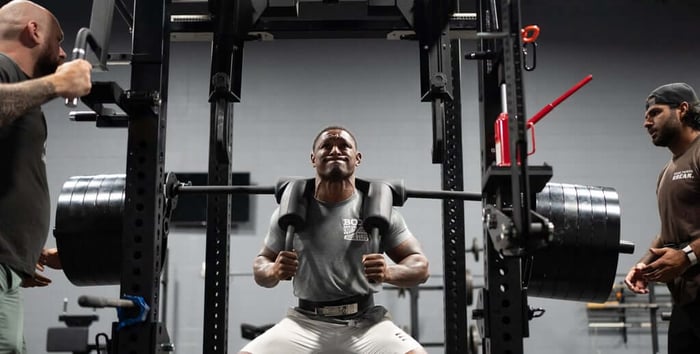
Safe Execution
The greatest misconception about Westside Barbell and our approach to training is that recklessness is part of it. Lou’s approach to training was entirely based on science and reason. If risks were being taken, they were understood and done in the name of pushing human limits and discovering what is and isn’t possible.
Lou’s goal was to create the best athletes possible. This included ensuring athletes had high competency in movement and execution. On any training day, whether maximal or dynamic, Lou always emphasized strict technique and execution.
The history and training experience of this gym have given us knowledge of what is and isn’t possible. The training groups of the past provided tremendously valuable information that led to where Conjugate is now. Today, our injury rates are incredibly low, even while our athletes compete at the world level in the toughest grappling contests.
How can we train at maximal effort while keeping injury rates low and competition success rates high? By appropriately monitoring our athletes and controlling the outcomes of their workouts, we can ensure they perform well. Especially during maximal effort, we evaluate each rep from warm-up to top set to identify technique breakdowns that indicate the need to end the exercise.
Maximal effort training, when properly regulated, is as dangerous as any other form of training. It all boils down to ensuring athletes do not train beyond their current capabilities during the workout. It takes a coach with experience to know when to push the intensity and when to shut down the maximal effort exercise and move on to accessory work.
If a coach believes maximal effort is unnecessary or unsafe, that says enough about their coaching abilities.