
Table of Contents
The Conjugate Method is famous for building elite level powerlifters, but its real value is building athletes who need to get stronger, faster and more explosive. That’s exactly what high school wrestling demands.
Wrestling is a weight-class sport. Athletes need to get stronger without gaining extra weight. They must train to perform better on the mats while staying in the same weight class.
The Problem
The problem is that many training programs miss this. They focus too much on getting bigger instead of strength that carries over to the mats, add extra conditioning that wears athletes down, or use old plans that leave wrestlers tired and slow.
The Solution
Strength and conditioning for wrestlers should match the goal of the athlete. High school wrestlers need to train like athletes, not to be professional lifters. That’s where the 3-day Westside Conjugate system comes in.
Westside’s Foundation for High School Wrestling
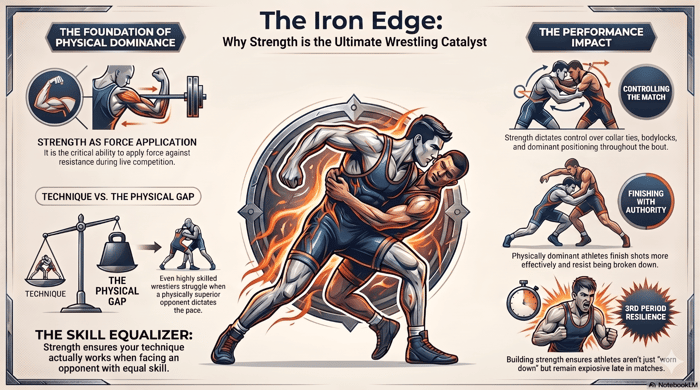
Technique matters until you face someone just as skilled but stronger and faster. At that point, strength wins.
You see it every year. One wrestler goes to every camp but still gets pushed around by someone stronger and more physical.
True wrestling strength goes beyond the weight room. It’s defined by the ability to apply force against resistance in live moments on the mat. It shows up in:
Collar ties
Body control
Finishing shots
Holding position late in matches
A stronger wrestler controls the pace and positions in the match. Technique gives you the plan but strength makes it work. For parents, the difference is clear: your child is maximizing their hard work with smarter programming. Instead of breaking down during the season, they are building strength that carries over to the mat when the matches matter most.
The Problem With Traditional Wrestling Training
Walk into most weight rooms and you will see athletes working hard. High school wrestlers rarely lack effort; what they usually lack is clear direction. Many wrestlers train hard, but not in a way that helps them win on the mat.
Most strength training for wrestling is built like bodybuilding, general fitness or “functional” sport specific movements, and not to increase their performance on the mat.
Most wrestlers fall into a few common traps.
Over Conditioning
Wrestlers often do too much conditioning and not enough strength work. Wrestling practice already gives plenty of sport specific conditioning through going live, drilling, and matches. When athletes add more conditioning, they just get tired without getting stronger because of the tradeoff. They learn to push through fatigue, but they are not strong enough to control positions or finish shots.
Rather than adding endless conditioning, wrestlers should prioritize building maximum strength per pound.
Training for Size Over Strength
Another major trap is training for size in a weight-class sport. Bodybuilding-style training focuses on adding size, but that can hurt wrestlers. Extra weight can push an athlete into a higher class or force a tough weight cut. Both make it harder to perform. Because wrestling is a weight-class sport, the primary focus must be maximizing strength without adding unnecessary size.
Peaking at the Wrong Time
Finally, many traditional programs peak at the wrong time. Many plans are built to peak at one time. Wrestling does not work like that. Wrestlers compete every week. They need to be ready all season. Because of this, many feel strong in the offseason but slow and at the end of the season when it matters most at the state or national ranking tournaments.
The result is easy to see. Performance drops late in the season. Recovery gets harder. Strength from the weight room does not carry over to the mat.
Piling on extra workouts only adds to fatigue. Wrestlers need a system that builds strength, speed, and endurance at the same time while keeping them ready to compete anytime all year round. That is exactly what the Conjugate Method was built to do.
What Is the 3-Day Westside System?
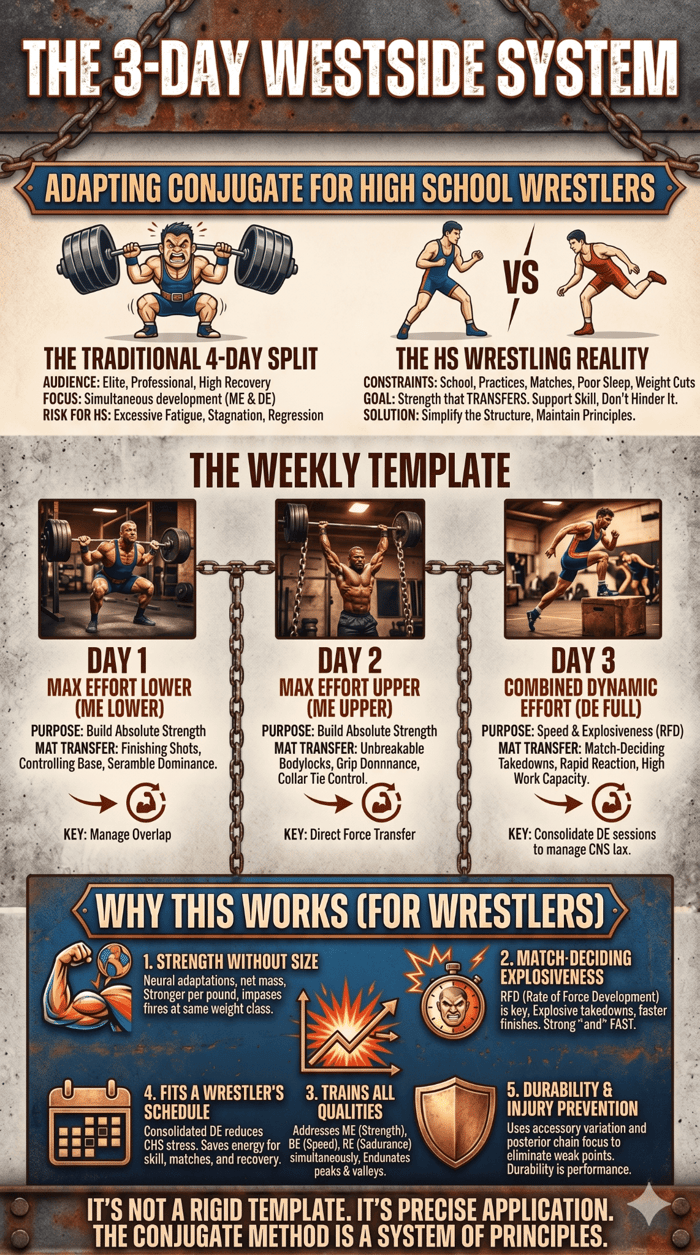
The traditional Conjugate Method uses four training days: Max Effort Lower, Max Effort Upper, Dynamic Effort Lower, and Dynamic Effort Upper. This works well for powerlifters who have the time to recover from hard training.
High school wrestlers are balancing school, practice, matches, travel, and weight management. Because of this, their ability to recover is limited. When a four-day lifting program is added on top of everything else, it often leads to fatigue and poor performance.
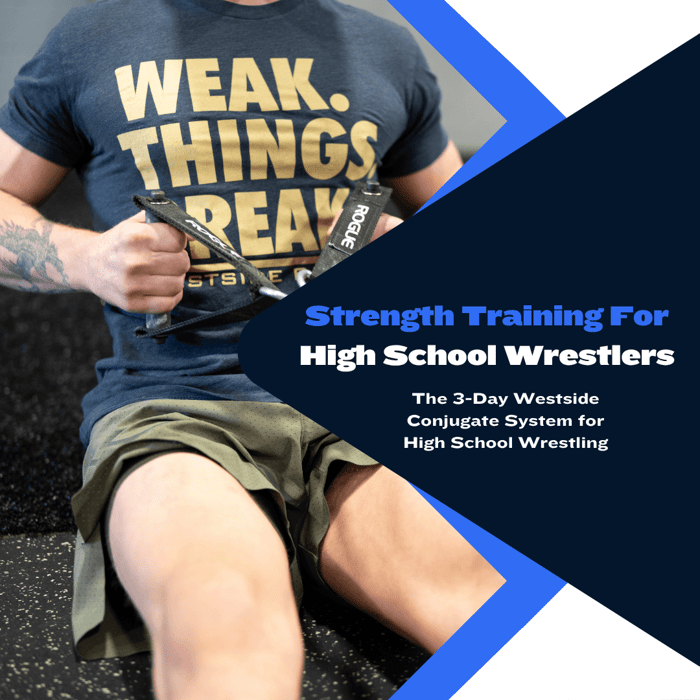
To solve this, we adjust the system by using a three-day split. Day one is Max Effort Lower, day two is Max Effort Upper, and day three is a full-body Combined Dynamic Effort day. This keeps the most important parts of the Conjugate Method while removing unnecessary stress.
Why the 3-Day System Works
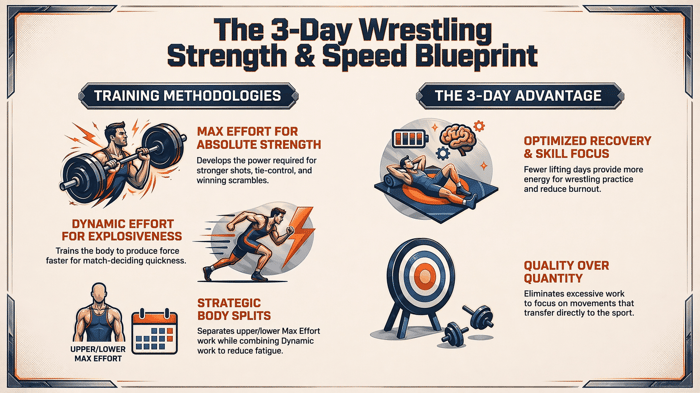
Max Effort training builds absolute strength by training the body to handle heavy weight. This stimulus improves how many muscle fibers you can use at once.This may include heavy front squats, sumo deadlifts, or safety bar squats for the lower body and overhead press, floor press, and strict row variations for the upper body. For a wrestler, this means stronger shots, better control in ties, and more power in scrambles. By separating upper and lower body work, we can develop strength without adding extra fatigue.
Dynamic Effort training teaches the body to produce force fast. This is called rate of force development (RFD).
For high school wrestlers, Dynamic Effort training should be applied with a focus on speed, efficiency, and recovery:
Use speed-based lifts
Speed squats, deadlifts, and bench variations train the body to apply force quickly.Include explosive movements
Jumps, med ball throws and other explosive exercises improve athleticism and mat carryover.Prioritize bar speed
If the weight is moving slow, it is no longer Dynamic Effort work.Train for match situations
Wrestling matches are decided in quick moments. The athlete who can produce force faster has the advantage.Keep training efficient
Combine upper and lower body dynamic work into one session to reduce fatigue and leave more energy for practice and competition.
One of the biggest benefits of the three-day system is improved recovery. With fewer lifting days, athletes have more energy for practice and competition. This reduces burnout and lets them improve their skill while getting stronger.
This approach also forces a focus on what actually matters. More work does not lead to better results. Success comes from building targeted strength, speed, and explosiveness in a way that transfers to the sport, rather than simply doing more volume
What This Looks Like in Training
A wrestling strength training program using the Conjugate Method is built to develop strength, speed and endurance at the same time.
A week following the 3-day Conjugate system for wrestling with the Combined DE training day would look like:
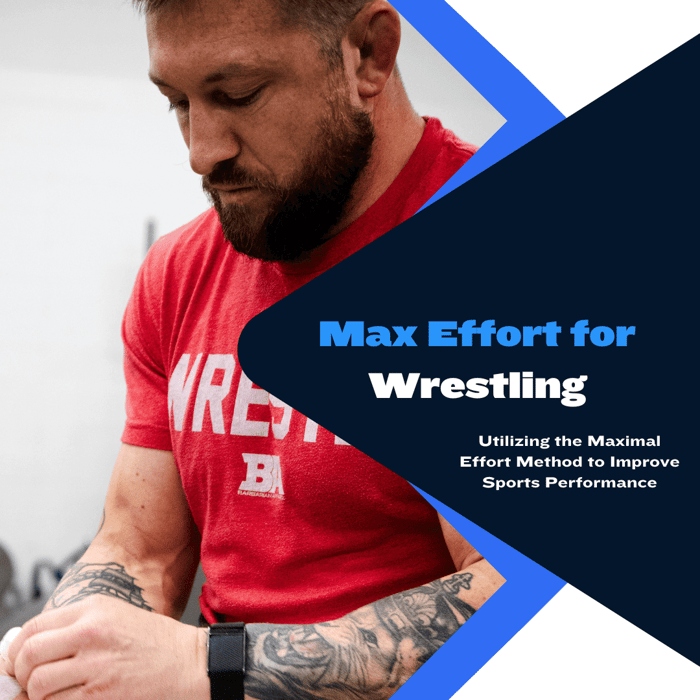
Day 1: Max Effort Lower (Sumo deadlift, Pin 3, front squat, SSB box squat) + accessories
Day 2: Max Effort Lower (Bench press floor press, overhead press) + accessories
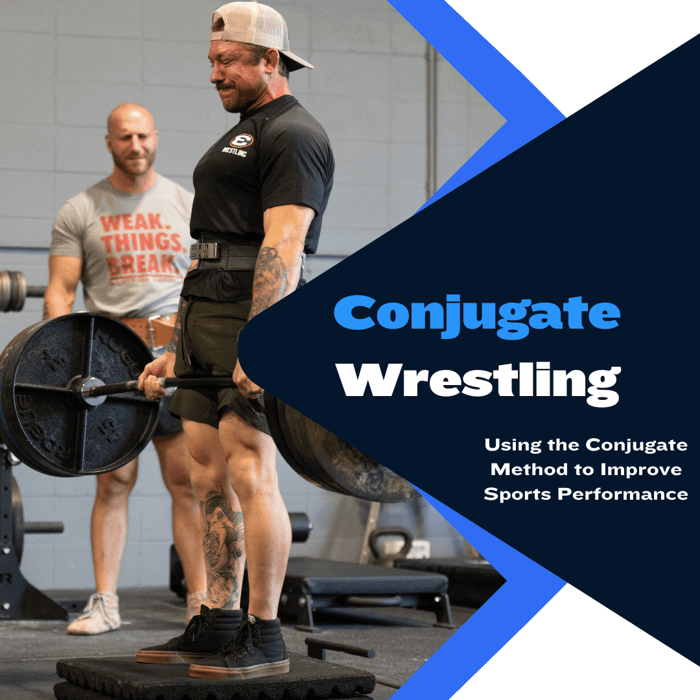
Day 3: Combo Dynamic Effort (Speed squat, bench and deadlift) + 2-4 accessories for each main lift.
The accessory work is used to build up weak links; the posterior chain, upper back, and core. Accessories account for 80% of the training volume, while the main lifts provide the 20% high-intensity stimulus.
Final Thoughts
The goal of training is not to win in the weight room; it is to win on the mat.
The three-day Conjugate system builds strength, speed, and endurance at the same time without wearing the athlete down. It allows wrestlers to stay strong, explosive, and ready throughout the entire season, even if they compete year round.
The Conjugate Method was never meant to be a fixed copy-and-paste plan. It is a system built on principles. The best coaches adjust those principles to fit the athlete and the needs of the sport. If you are a wrestler, parent, or coach, stop guessing and start following a system that actually shows up on the mat.