Table of Contents
One of the most beneficial aspects of the Conjugate Training System is its consistent focus on developing absolute strength via the maximal effort method. Absolute strength refers to the maximum amount of force an athlete can produce and plays a significant role in all aspects of athleticism. While some may think consistent development of absolute strength benefits only strength athletes, it directly impacts sprint speed, jumping ability, and overall durability.
At Westside, the maximal effort method is used to improve absolute strength on a weekly basis. The primary goal of maximal effort training is to train at or above 90% each week, while avoiding missed lifts. By doing so, we attain adequate stimulus to increase absolute strength while lowering the risk of injury.
Each week, we perform a maximal effort lower- and upper-body exercise, working through a variety of exercises over 16 weeks. We follow an ABAB pattern, with an “A” and “B” set of exercises that we test, and then retest within the 16-week timeframe.
However, maximal effort training isn't something everyone can jump into right away. For maximal effort training to be productive, athletes must build foundational strength and physical capacity. We can’t expect an athlete new to barbell training to jump into maximal effort training in their first week.
In this article, we will discuss how to properly introduce maximal effort training to athletes new to barbell training.
Month 1: Introduction to Training
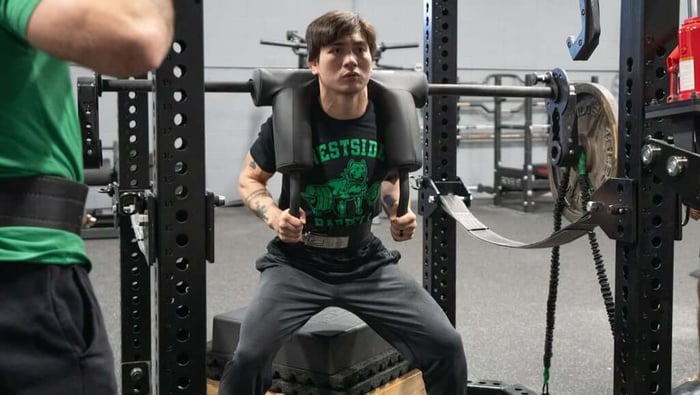
While max effort training greatly benefits beginners, we must learn to swim before diving into the deep end of the pool. When training an athlete new to barbell training, the athlete must understand and execute proper form in basic barbell movements. At Westside, athletes must understand how to squat, bench press, and deadlift properly.
During the first month of training, athletes will focus on developing kinesthetic awareness and optimal form while gradually increasing training intensity, performing multiple sets of 1-5 reps in the basic barbell movements.
In the first week, we will begin with a barbell and evaluate each movement.
As the exercise begins, athletes will start with an empty bar. We will start adding weight once athletes can move the empty bar without issue. We can work up to but not exceed 50% of perceived absolute strength capability during the first week.
The goal in the first week is to complete 3-5 sets of 5 repetitions, performed with strict adherence to technique guidelines.
Most individuals take about a week to develop basic movement skills in standard barbell exercises. Remember, optimal movement patterns vary by athlete; avoid a one-size-fits-all approach to movement evaluations.
As week two begins, we will increase the training weight to acclimate the athlete to higher training intensity. The goal in the second week is to raise training intensity to what the coach or athlete perceives as 60-70% of the athlete’s current absolute strength capacity. Once there, we will perform 4-5 sets of 3-5 repetitions.
Since the training intensity is relatively low, movement execution should be strict.
We will begin raising the intensity to near-max effort levels in week three. The focus of week three is to increase the training intensity to 75-80%, further acclimating the beginner athlete to the demands of high-intensity training.
The goal of this week is to perform 3-5 sets of 1-3 repetitions in the squat, bench, and deadlift while maintaining relatively strict form throughout the exercise. However, as fatigue sets in, coaches and athletes should expect a slight deviation from strict form.
Once the athlete completes the first three weeks of training without issue, we can introduce the first training session that qualifies as max effort during week four. This week is when the athlete finally reaches the 90% intensity threshold, the point where true max effort training begins.
The goal this week is to perform 3-5 sets of single reps starting around 80% and gradually load the bar so the final two sets are at a perceived 85% of the athlete’s current level of absolute strength.
During this workout, the athlete will likely have trouble maintaining optimal form in the last few sets.
However, these breakdowns should be no more egregious than the form deviation experienced in week three. Allowing the athlete to experience slight breakdowns in form and execution builds a confident, strong athlete. Abandon the belief that athletes are fragile.
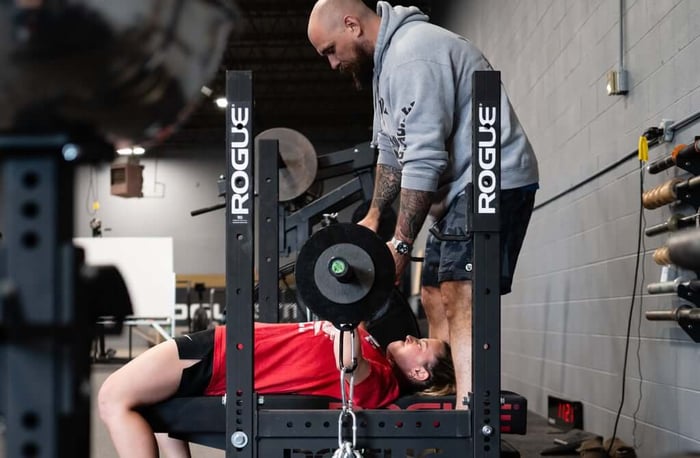
Month Two: Heavy Effort Training
Once athletes have completed the first month of training, we can move on to what is called heavy effort training. This training will be focused on working up to top sets of 3-5 reps. This month, we will work up to true top sets, meaning we will seek the highest level of output in one set, rather than the multi-set approach used in the first month.
This approach will help us prepare athletes for traditional maximal effort training, where we work up to a true top-set single. Also, in month two, we will have enough training data to set reasonable targets for heavy-effort top-set working weights. Month one relied on feedback and perception; month two allows for targets to be set based on the athlete’s current level.
The first two weeks of heavy effort training will feature 5-rep top sets in a few key movements. In week one, we will perform a squat and bench press 5-rep top set for our heavy-effort lower and upper workouts. Our training intensity target will be 80-85% for both of these lifts.
In week two, we will execute a deadlift and close-grip bench press 5-rep top set. These lifts will focus on reaching the same intensity threshold as week one and will give us a good idea of what to expect in working weights for the final two weeks of month two.
Once we reach the final two weeks, we will move into top set triples. When executing triples, our training intensity target will be 85-90%.
We will follow the same workout rotation as we did in the first two weeks. In week three, we will work up to a top-set triple in the squat and bench press; in week four, we will work up to a top-set triple in the deadlift and close-grip bench press. When executing the triples, we should see a gradual but acceptable breakdown in technique as athletes work through reps one, two, and three.
We do not want to allow egregious breakdowns in technique, but we do expect a slight breakdown in technique to occur when athletes are working around 90% training intensity.
Once we finish month two, we will have established what 90% training intensity is for each athlete. Now that we have a reliable target number for the basic lower- and upper-body lifts, we can transition to true maximal effort training in month three.
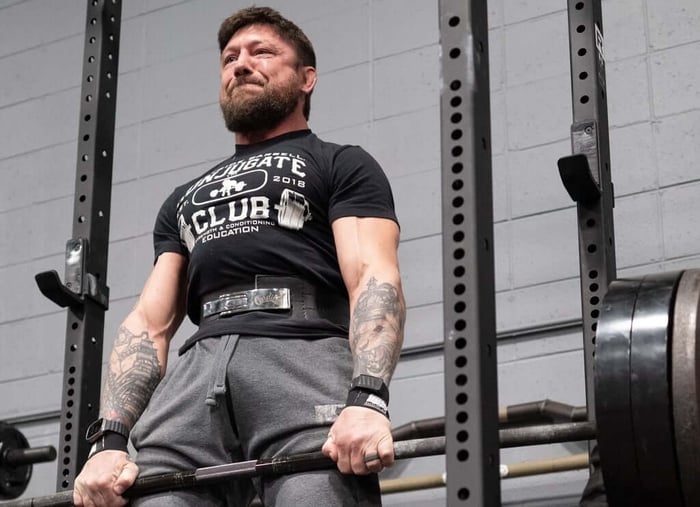
Month Three: Maximal Effort Begins
Now that athletes have built kinesthetic awareness, coordination, and strength, it is time to move on to true maximal effort training. This means athletes will begin working up to top-set single reps. This is where the most rapid gains in absolute strength begin.
Before moving into true maximal effort work, coaches should take time to evaluate each athlete appropriately. Just because a specific amount of time has passed does not mean all athletes will be ready to advance. Some athletes may need another month or two after the month two training scheme before moving on to true maximal effort work.
However, for the sake of this article, we will assume the athlete has progressed as expected and has checked the strength and coordination boxes necessary to move on to maximal effort training.
The initial maximal effort exercise rotation will be simple. Our strategy will be to include the lifts we tested during our heavy effort work in month two, along with what would be considered basic exercise variations. Considering the athletes we are working with are new to maximal effort and exercise variation, we do not need to go overboard and use every training tool at our disposal.
We will build both an “A” and “B” set of maximal effort lower- and upper-body exercises that will be tested and retested over the next 16 weeks. Here is what that rotation will look like.
Lower Body Maximal Effort:
Month A
Week 1 – Barbell Squat
Week 2 – Deadlift
Week 3 – Box Squat
Week 4 – Giant Cambered Bar Good Morning (top set of 3 reps)
As you can see in month A, we are sticking to basic movements. Perform the squat and deadlift movements for a top-set single, while working up to a top-set of three reps (heavy effort) on the good morning exercise. Due to the risk of injury, we never perform a true maximal effort single for any good morning variation.
Month B
Week 1 – SSB Squat
Week 2 – 2” Mat Deadlift
Week 3 – Squat vs. Chain
Week 4 – SSB Good Morning (top set of 5 reps)
In month B, we introduce a slight variation to the mix, but still stick to basic exercise variations. Similar to our approach in month A, the good morning exercise will be performed for a top set of five reps as a heavy effort lift.
Upper Body Maximal Effort:
Month A
Week 1 – Bench Press
Week 2 – Close-Grip Bench Press
Week 3 – Floor Press
Week 4 – Push Press
The goal during month A is to execute basic press movements so athletes can build strength and competency before moving on to the slight variations featured in month B. As you can see, we change up the grips and the pressing angle, but we keep the movements basic.
Month B
Week 1 – Bench Press vs. Chain
Week 2 – Axle Bar Bench Press
Week 3 – Z Press
Week 4 – Dead Press (2-board level)
As you can see, we add a bit more variation in month B. Accommodating resistance is added, along with specialty bars and exercises focused on specific ranges of motion.
The exercises featured in month A will be movements performed during our heavy effort work in month two. This gives us initial 90% intensity targets to ensure the first month is productive. The month B exercises are new variations where we will set records during the first run-through, then seek to break those records in the second run-through.
Once we complete the ABAB pattern, we will alter the movements to avoid accommodation. If an athlete is focused on a strength sport, we will keep the competition lifts in the rotation rather consistently. If an athlete is focused on conventional sports, we do not have to be as concerned with keeping the competition barbell lifts in the mix.
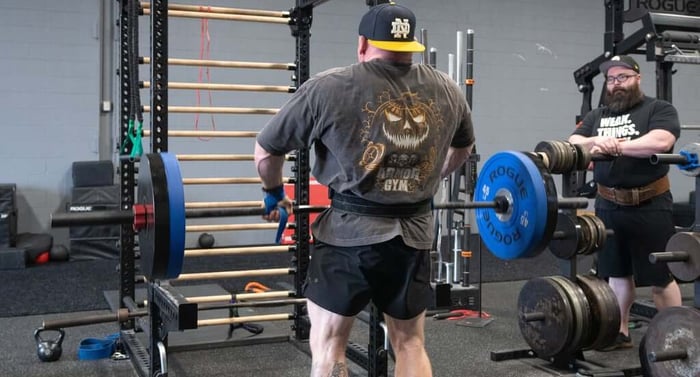
Success with Maximal Effort Training
Introducing maximal effort training into an athlete’s strength and conditioning program can produce profound results. Improving absolute strength increases the capacity for all other strengths and traits to improve, helping athletes make progress year after year without stagnation.
In addition, athletes will increase bone and tissue density, becoming more durable and resilient.
The key to success with maximal effort training comes down to two things: properly introducing maximal effort work within a training program and properly programming and executing the maximal effort method. In this article, you have a blueprint for both successfully introducing and beginning maximal effort training.
Continued success depends on the coach and athlete’s ability to execute the training properly and avoid getting greedy with maximal effort attempts. As we mentioned previously, we expect some breakdown in technique to occur as intensity increases. Still, we should never see an egregious breakdown in technique where the risk of injury increases significantly.
Coaches should judge warm-up sets and gauge where the athlete is recovery-wise for that specific session. If we see evidence a PR is possible, we go for it. If we realize a PR is not in the cards, we aim for at least 90% for adequate stimulus, then move on to accessory work.
Success with maximal effort work comes down to discipline and awareness. Coaches and athletes must avoid greedy PR attempts and must remain aware of current recovery status.
The goal is to gradually increase absolute strength week to week, month to month, and year to year. This goal will never be achieved in one specific week. For maximal effort training to be successful, athletes must remain healthy and injury-free so they can execute this training consistently.