Table of Contents
The repeated effort method is one of the three primary strength training methods used within the Conjugate System. This training method focuses on using submaximal weights lifted to near or full failure. The goal of this work is to achieve adequate muscular hypertrophy while also increasing work capacity.
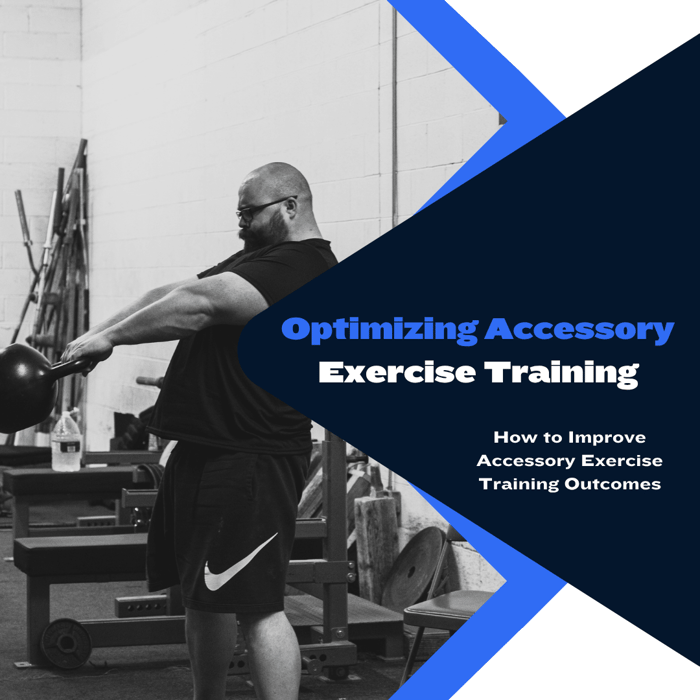
Achieving success with the Conjugate Method relies heavily upon accessory exercise training. It is important for athletes to place as much emphasis on their repeated effort training as on their maximal or dynamic effort training. While improving absolute strength and explosive power are indeed important, repeated effort training is a necessary component for improving athletic performance.
Another valuable aspect of repeated effort training is the ability to focus on identified muscular weaknesses. With our accessory programming, we can create a slight bias toward weak muscle groups to increase the total training volume they accrue. However, it is important to avoid excessive bias towards a specific weakness, as this risks creating new weaknesses by neglecting other muscle groups.
To build on this foundation, we will now discuss a few ways to approach accessory exercise execution to ensure this work is as productive as possible.
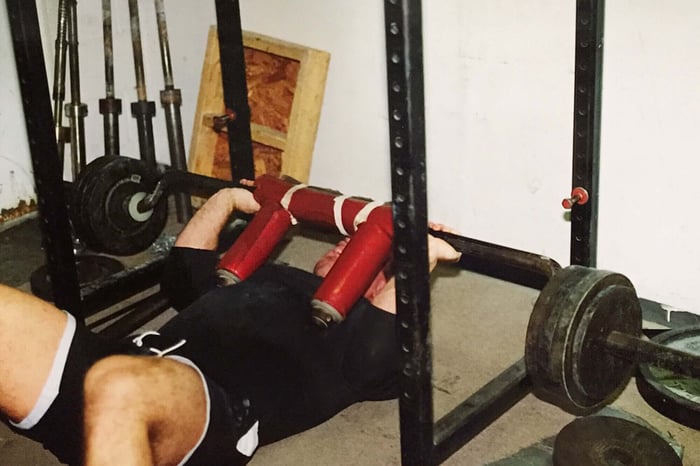
The Standard Approach
When athletes first begin training, it is important to keep training as simple and effective as possible. As a new athlete to Conjugate, it is likely that the main exercises will be a bit taxing. This is due to a lack of GPP, which limits an individual's overall volume tolerance.
In this case, we want to use the “standard approach” when executing our accessory exercise. With this approach, we select a challenging weight based on the prescribed set and rep parameters and stick with it throughout all sets. This helps prevent beginners from overshooting their training weight, reducing the likelihood of missed reps.
As a beginner, you likely do not have reference points for accessory exercise working weights. It is also unlikely you’ve experienced the training intensity, volume, and density associated with the main exercises performed at maximal and dynamic effort.
By being somewhat conservative and sticking to a reasonable weight for all sets and reps, you guarantee your accessory work will be executed to a technical standard, with all prescribed sets and reps completed.
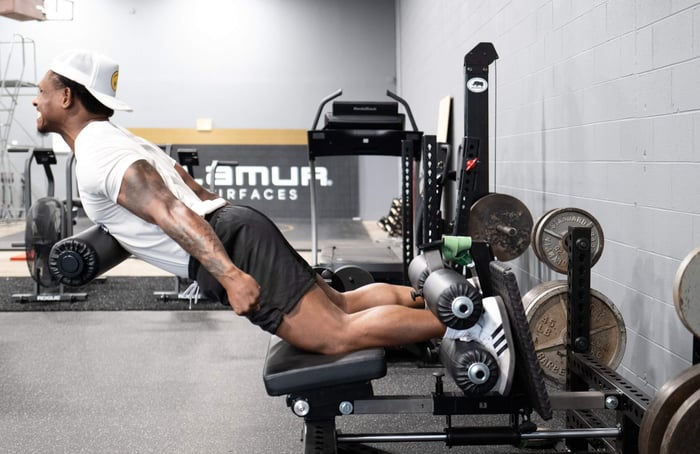
The Top Set Approach
Once athletes have become acclimated to training and developed an ideal level of GPP, we can begin to introduce more advanced approaches to accessory exercise training. The top-set approach calls for athletes to work up to a top-set weight on the final set of an exercise, while still being able to meet the rep target of the set.
For instance, say we are executing the push press as a primary accessory exercise, programmed for 4 sets of 5 reps. Before we begin the exercise, we will estimate how much weight we could expect to move in a top set of 5 reps. From there, we will work backward to select adequate working weights for the first three sets.
The top set estimate will represent 100% of our estimated capability (the maximum weight you believe you can lift for the specified reps). We will then execute sets 1–3, following an 85%, 90%, and 95% escalation in intensity (using 85%, 90%, and 95% of the top set weight). Here is what that would look like for an athlete estimating a top set of 315lbs for 5 reps in the push press:
Top Set Training Weight Target = 315lbs
Set 1 = 270lbs (~85%)
Set 2 = 285lbs (~90%)
Set 3 = 300lbs (~95%)
Set 4 = 315lbs (Top Set Goal)
In my experience, this is one of the best ways for experienced athletes to complete a primary or multi-joint accessory exercise. In this example, the first three sets are effective, with the final set maximally effective.
The reason this approach is reserved for experienced athletes is the reliance on the ability to correctly estimate top set training weight targets. If an athlete is inexperienced, it is highly likely that an over- or undershoot will occur, leading to a less effective workout. However, if an athlete is dialed in and can reasonably estimate top-set training weight targets, this approach is incredibly effective.
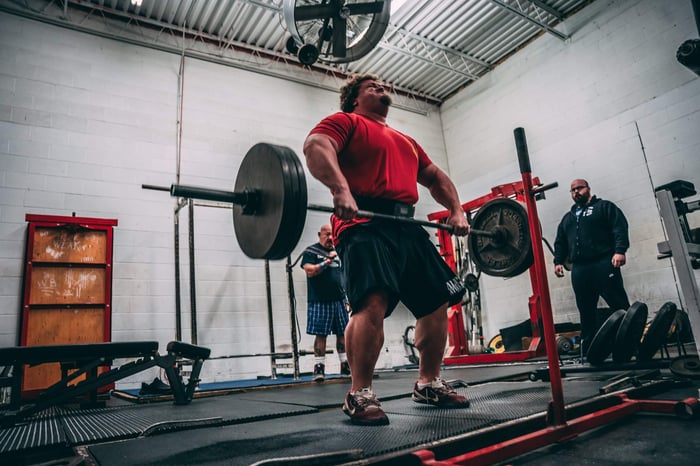
The Peak Set Approach
While the top-set approach is often the best way to execute multi-joint primary accessory exercises, the peak-set approach is the best option for single-joint accessory exercises or any multi-joint movement that exceeds 8 reps per set. With the peak-set approach, we time when we use the heaviest weight of the exercise based on estimated fatigue levels.
When we perform the primary accessory exercise in the workout, we expect to have considerable energy left in the tank. While main exercises are no doubt fatiguing, they leave enough available energy to allow an athlete to execute the primary accessory exercise at a fair level of intensity. This is why the top set approach is best.
However, after executing a main and primary accessory exercise, fatigue begins to limit training weights and overall capabilities. We still want to train with the heaviest weight we can handle while being able to execute all sets and reps to standard, so we need to properly time our use of our peak training weight based on estimated energy levels.
This approach is somewhat similar to the top-set approach, since we will still estimate a target training weight; the difference is when we escalate to that weight. Our goal is to ensure we use the heaviest weight when we know it will still be possible to complete all sets and reps to standard.
As we work through our secondary accessory exercises, fatigue begins to set in, and muscle pumps limit our capabilities. For instance, if we are executing rolling dumbbell triceps extensions for 4 sets of 10-12 reps and we want to use the 100lb dumbbells, we want to time their use to ensure we are not dealing with fatigue or a pump that limits our ability to do so.
So, following this rep scheme, we will perform the first set with 10lbs under our target weight using 90lb dumbbells, then immediately jump up to 100lb dumbbells in the second set. In this case, the 90lb set acts as a bit of a warm-up, and then we go right to the target training weight while fatigue is still in check.
Now, say we just completed a triceps-focused primary accessory, such as a close-grip bench press or Spoto press. In this case, we would likely be able to jump right to the 100lb dumbbells on the first set, considering we are already warmed up and ready to perform extensions. If the first set goes well, we could even exceed our target weight for the day and move to the 110lb dumbbells.
Simply put, with the peak-set approach, we aim to hit our peak training weight between sets 1 and 2 for a 3-set exercise or between sets 1 and 3 for a 4-set exercise. Once we have reached our peak set, we will then perform the following sets using a weight that allows us to meet and exceed the required reps, training to failure.
This allows us to both reach a peak training weight for the exercise and hit a set or sets to total failure, which is more in line with the Soviet approach to repeated effort training.
Optimization is the Goal
One of the most important aspects of successful training is maintaining a trend of optimal workouts. This does not mean every workout is perfect or goes to plan; it means we are making choices during training to ensure we get the most out of the day, depending on current fatigue levels.
The approaches discussed in this article are simple ways for athletes to achieve optimal training intensity during their accessory exercise work. These approaches ensure that training weights are ideal for the conditions (fatigue + muscle pump), ultimately leading to greater training adaptations in muscle development and improved work capacity.
With accessory exercise training, we want to avoid going through the motions. In the Conjugate System, accessory exercises make up 80% of our training volume. Knowing this, we cannot afford a lackluster effort when executing this work.
Athletes must constantly seek to increase the weights used for their accessory exercises. It is not enough to complete the exercise; it must be done with a stimulating training weight. This training weight should be challenging while still allowing for all sets and reps to be executed to a technical standard.
Westside Barbell Book of Methods — Louie Simmons

$50.00
What this book is The Westside Barbell Book of Methods is Louie Simmons' lifetime of work in 319 pages. It is the master text on the Conjugate Method and the training system Louie built at Westside Barbell over four decades.… read more