Table of Contents
In terms of efficiency and effectiveness, no strength training method compares to the Conjugate Method. Our approach to training allows athletes to simultaneously develop all aspects of strength, athleticism, and sports performance each week. This training also helps coaches and athletes know how strong, explosive, and in shape an athlete is at all times.
There is no guesswork when it comes to athlete evaluation. Each week, our athletes will perform maximal, dynamic, and repeated effort exercises. This allows us to accurately evaluate their current levels of absolute strength, explosive power, work capacity, and overall conditioning. We can also evaluate their rate of recovery based on their ability to meet training expectations each week.
This means not only that we know where training is trending, but also that we can immediately adjust training to maintain an optimal level of efficiency. Based on weekly performance and evaluation, we can adjust training to meet the athlete where they are currently at and get them to where they are trying to go in as efficient a manner as possible.
To the uninitiated, our methods can seem chaotic or confusing. However, once you understand the foundational strength and conditioning science, our approach is the most reasonable way to train athletes.
Below, we will go over a few tips to help improve your experience when utilizing the Conjugate Method.
Learn to Read the Room
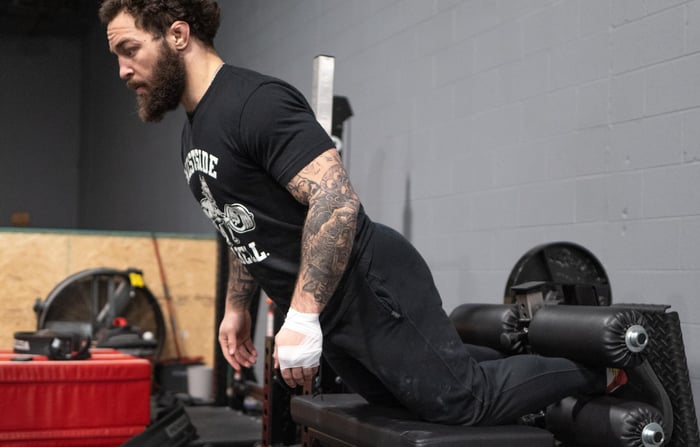
One of the key aspects of achieving successful training outcomes is a coach's ability to help an athlete accrue as many productive training sessions as possible. As anyone who has worked with athletes knows, not every training day will go to plan. Athletes have other demands related to their sport that will, at some point, interfere with workout scheduling or cause fatigue-related issues that must be accounted for.
This is where the art of coaching comes into play. Nearly anyone can learn the basics of foundational strength and conditioning science. However, a good coach knows how to wield these principles effectively, based on the situation and the athlete they are working with.
Putting together a solid training program is not enough. At some point, aspects of life or training will interrupt the flow of training. It is at this point that adjustments must be made to ensure the current and future training sessions remain productive and that training goals are met on time.
For instance, say an athlete shows up on a dynamic effort lower day with excess sport-related fatigue that prevents them from meeting the velocity requirements for each set. The average coach may let the workout continue, while technique breaks down further with each set. By the final set, athletes are moving the barbell at a velocity approaching heavy effort training, and the squat has turned into a half squat, half good morning movement.
The informed coach does not make such mistakes. After discussing the workout with the athlete and evaluating warm-up sets, this coach knows the prescribed dynamic effort training day will be less than effective. From here, the informed coach knows the dynamic effort training percentage for this workout must be reduced and moves forward accordingly.
We cannot expect athletes to be able to execute a preplanned workout to standard every training day. Ultimately, as coaches, we must read the room and make the necessary adjustments to ensure all athletes have a productive training session. When dealing with busy athletes, we only have so many workouts per week, month, and year, so we must make these sessions as effective as possible given the situations and circumstances we face.
Some weeks will go to plan, others will not. As a coach, you cannot be so locked into a pattern or approach that you force athletes to adhere to the plan no matter the situation. In the words of the great Dr. Mel Siff, the goal is to train optimally, not maximally.
The Importance of General Physical Preparedness
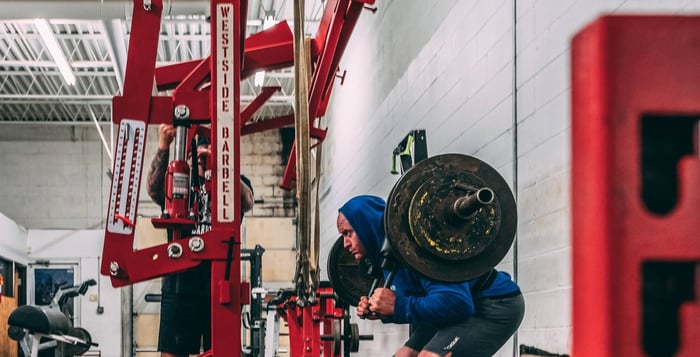
One aspect of training that often gets overlooked in powerlifting is general physical preparedness. Often, this training is seen as necessary only as athletes begin training and is then discarded. However, if an athlete wants to continue making progress, maintaining a high level of physical fitness is necessary.
One thing Lou was adamant about was the idea that as strength increases, total training volume must also increase. When dealing with strong athletes, this volume cannot be made up during the main exercises performed at high training intensity. To do so would negatively impact the rate of recovery and increase the risk of injury.
So, how do we accumulate volume while keeping training intensity regulated to maintain an adequate recovery rate? General physical preparedness training.
As an athlete gets stronger, training becomes more demanding. If an athlete goes from a 900lb squat to a 1000lb squat, not only does their maximal effort work become more demanding, but their dynamic effort training becomes more demanding as well. To ensure athletes can execute these workouts, we must ensure their physical fitness is in check.
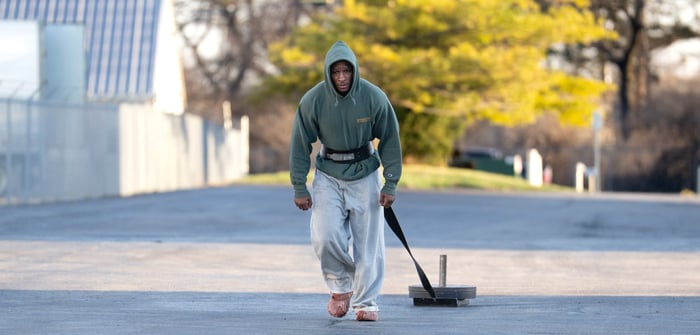
One of our go-to approaches to maintaining optimal physical fitness is sled training. The sled has a low impact on joints and can be used for both upper- and lower-body training. For lower-body training, we can go with forward or backward sled pulls, and for upper-body, we can do sled tricep extensions, face pulls, or chest flies.
We can also perform exercises such as belt squat marches, kettlebell swings, weighted carries for distance, or ultra-high rep banded exercises. No matter the exercise used, the goal remains the same: keep it low impact from a recovery standpoint and elevate the heart rate.
Another step to ensure athletes elevate their fitness to match their current strength is to add some work on rest days. This work is very low-impact, where we may add an incline treadmill walk or take a 1-2-mile walk with the dog after dinner. It doesn't have to be grueling, just something to get the athlete off the couch and moving.
Dumbbell-Only Workouts
Throughout the year, our goal is to use a barbell as much as possible during our main exercises. Particularly for powerlifters, we want to ensure we are developing strength and technique that directly transfer to sport. Given that powerlifting revolves around the barbell, we prioritize work with it.
However, athletes may experience pain in the wrists, forearms, elbows, or shoulders when performing pressing movements with a barbell. This is where dumbbell workouts can be added into the mix.
When using a barbell, the athlete is forced into a fixed position. Once we grip the barbell, the chosen grip dictates the stress on the joints and muscles, which can lead to pain from overuse. Dumbbell training allows the arms to work independently and for the athlete to manipulate the angle and trajectory of the press.
We can also use dumbbell workouts as a planned deload, performing a dumbbell-only upper-body workout every four weeks. These preplanned training adjustments help ensure the wrists, forearms, elbows, and shoulders get a break each month, keeping training on track and productive.
Dumbbell-only workouts are not only used in place of maximal effort upper training, but can also be used in place of dynamic effort upper training. As anyone who has used resistance bands knows, there are times when you can experience pain that feels like shin splints in the forearms. If we continue to use resistance bands, this pain will only get worse.
To alleviate this pain, we can perform dumbbell only workouts in place of traditional dynamic effort upper training until the issue is resolved.
When we execute a dumbbell-only upper workout, we still want to keep training intensity within a range that is productive. We do not want a 600lb bencher using 50lbs dumbbells for sets of 10. Ideally, athletes will execute 4-5 sets of 8-10 or 10-12 reps with the heaviest dumbbells possible, completing all sets and reps relatively pain-free.
On the last set, we may lower the weight slightly and perform an AMRAP set to achieve adequate hypertrophy.