Table of Contents
While the Conjugate Method is the most effective approach to strength and conditioning, it is not foolproof. If a coach or athlete fails to understand even one aspect of our training approach, the entire training plan can be derailed. This is why Lou stressed the need for coaches and athletes to read: if you intend to use the Conjugate Method to its fullest, you must understand foundational strength and conditioning methods and scientific principles.
As knowledge increases, the training adaptations follow suit. A coach with a proper understanding of our methods can deliver rapid results to their athletes, far beyond the limitations of conventional phase-based training programs. When a coach who knows their stuff wields the Conjugate Method, all aspects of strength and conditioning improve at a rate unmatched by any other approach.
However, even a coach with a solid understanding of the methods may make mistakes in their training. This could be due to programming errors or misuse of specific exercise variations. In this article, we will discuss a few common mistakes to avoid so that training remains productive.
Misuse of Reduced Range of Motion Exercises
One of the most common criticisms of our methods concerns exercise variations. Many wrongly believe that specificity lies within how competition-specific a variation is. In truth, what is most important is how specifically a training plan develops strengths and athletic traits. We believe that exercise variation increases the magnitude of training adaptations.
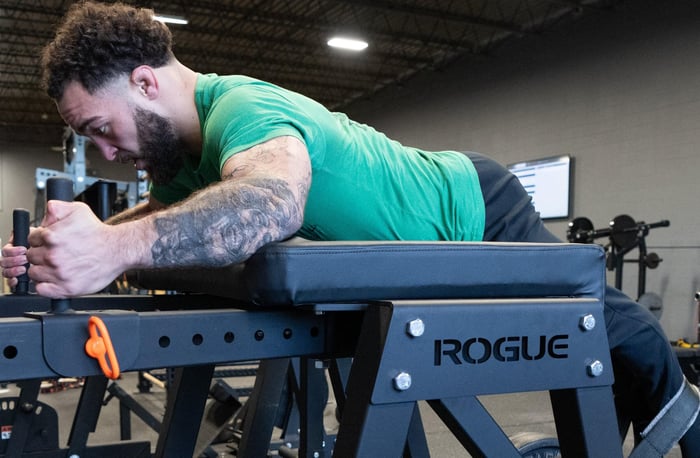
Reduced-range-of-motion exercises are movements we include in our selection of exercise variations. As the name implies, these exercises focus on specific joint angles and ranges of motion, rather than the entire range. We use these movements to place emphasis on specific joint angles and muscle groups, with the intent of eliminating an athlete’s sticking point in a particular exercise.
However, it is important to remember that these movements are meant to be used as needed, not constantly. Unfortunately, there are individuals who will frequently use reduced-ROM exercises as a means to ego-lift and work within ranges where they are strongest.
Again, we use these movements to focus on where athletes struggle most, aiming to eliminate a sticking point. We do not use these movements to avoid our weaknesses or as a means of ego-boosting.
Typically, we include one reduced-ROM maximal effort lift per month for both the upper and lower body. The exercise we select will depend on the individual we are working with and their current weak points. This is the appropriate approach when using reduced-range-of-motion exercises.
If your entire training plan consists of high box squats, three-board presses, and above-the-knee rack pulls, you can expect limited athletic development and overall progress.
Emotional Lifting
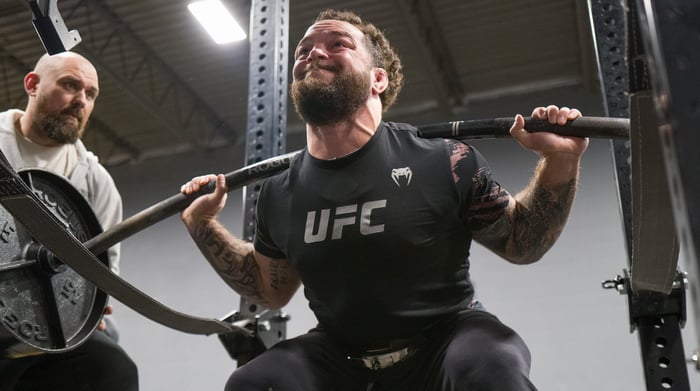
If anything will ruin a strength athlete’s career, it’s being an emotional lifter. If you’ve spent time in a gym, you’ve seen someone who screams and hollers before, during, and after every heavy set. This is not just annoying to others but also a poor way to train.
In the world of strength training, there exist two types of maxes: training maxes and competition maxes. These maxes differ for several reasons, including the athlete's emotional state.
When training, athletes should avoid relying on heightened emotional states or adrenaline. Training this way increases fatigue and yields unreliable data, as athletes cannot consistently replicate such emotional states from one session to the next.
This leads to some training sessions being great, and others being lackluster, all because the athlete is relying on adrenaline rushes and the energy in the room. The correct approach is a calm, almost robotic approach to all sets and reps. We no doubt lift with intent and aggression, but we avoid acting like we are about to jump off of a Viking ship and raid a village.
Then, once an athlete reaches competition, they not only receive a boost in performance from supercompensation, but they also benefit from the authentic heightened emotional state that comes with being in a true competitive environment.
As much as I hate to compare lifting weights to any sort of combat sport, being an emotional lifter is akin to being a fighter who spars at 110% every session. You’ll consistently show up to competition beat to hell, and your competitive career will be significantly shortened.
Overshooting During Maximal Effort Training
As I have mentioned previously, the most commonly mismanaged aspect of our training is dynamic effort. However, coming in a close second place would be mismanaged maximal effort training, specifically missed top sets. At Westside, our goal is to complete as many successful maximal effort top sets as possible.
Missed maximal effort reps not only increase the likelihood of an athlete reaching an excessively fatigued state but also increase the likelihood of overuse or catastrophic injury. As much as we want to put forth proper effort during maximal effort, we must do so while keeping the training reasonable and as safe as possible.
As a coach or athlete, you must learn to properly assess warm-up reps and accurately estimate what is in the cards for a top-set weight each session. We must understand that each session can be affected by fatigue accrued during that specific day, as well as fatigue accrued over the course of a training cycle.
Did the athlete have a long workday? Has sleep been poor? Has nutrition or hydration suffered from a busy schedule?
These are all things a coach or an athlete must take into account when setting expectations for each maximal effort training session. The goal of maximal effort training is to lift the heaviest weight possible that day, not all time. Of course, we strive for PR lifts, but we do not place an athlete at risk to attain them.
In truth, we can make meaningful improvements in absolute strength by reaching 90% of an athlete’s current max. Any sets beyond that just amplify the training effect but are not required. So, if an athlete is dealing with factors that limit performance during a max effort workout, we aim to reach 90% and then move on to accessory work.
Our goal is to achieve PRs and increase strength over 8-12 weeks. We do not require athletes to attempt PR lifts if warm-ups clearly show it is not feasible. When executed correctly, maximal effort training is the most productive method for a strength athlete. When mismanaged, it can become the most destructive. Use the methods properly, avoid greed, and watch your absolute strength improve rapidly.