


The Westside Barbell System
The Conjugate Method
The Conjugate Method is a weekly strength and conditioning training system that decreases physical weakness. It rotates exercises and effort levels so you continually get as strong and athletic as needed for your goal. Its success relies on a hierarchy that rotates stimulus and intensities to drive adaptation while reducing injury risk.
Read strength training articles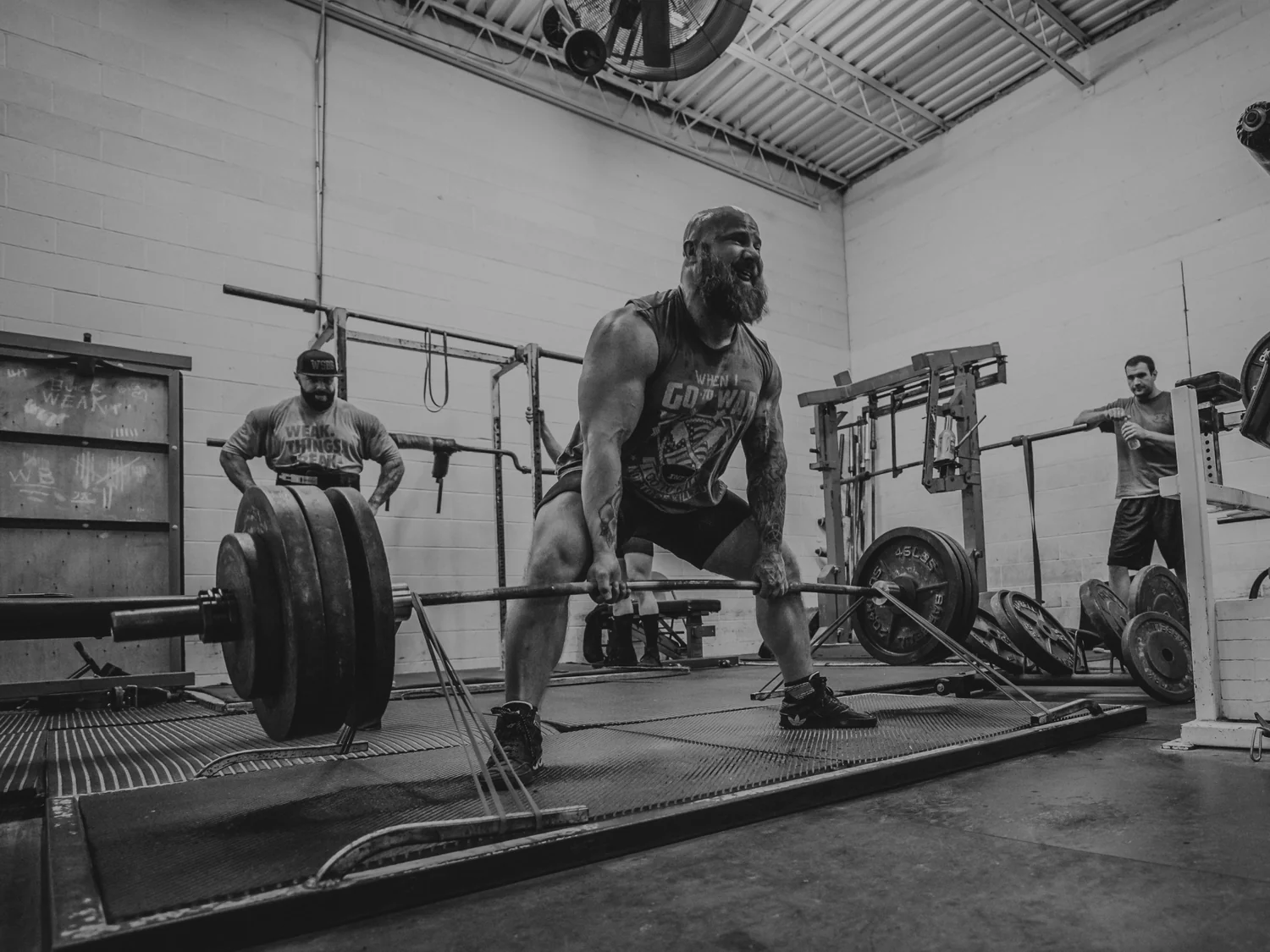
The System
What Is Conjugate Training?
Every training week acts as an assessment loop showing how strong (Max Effort), fast (Dynamic Effort), and athletic (GPP) you are. It also exposes your biggest weaknesses and attacks them via special exercises at planned volumes (Repeated Effort).
Modern Conjugate literature commonly refers to Louie Simmons' synthesis of two proven systems.
Origins
Conjugate Method Training System History
Louie drew from two systems: the Soviet model (high volume, strategic exercises) and the Bulgarian model (frequent near-max singles).
The Soviet approach prescribed tremendous volume and heavy-effort work but rarely >100% attempts on main lifts. As Zatsiorsky notes, maximal effort best improves inter/intra-muscular coordination and reduces CNS inhibition. The system also relied on strategic accessory work (good mornings, banded curls, sled dragging, etc.). Removing these to focus only on classical lifts leads to stagnation.
The Bulgarian system emphasized multiple daily sessions with frequent max attempts — effective but brutally demanding, with increased injury and burnout risk.

The Framework
Louie's Synthesis: The Westside Barbell Conjugate System
Louie combined Bulgarian-style maxing (Max Effort) with Soviet speed work (Dynamic Effort), then anchored progress with high-volume special exercises (Repeated Effort). Rotate the max-effort lift weekly to avoid burnout and retest ~every 9 weeks.
Squat, bench, deadlift — roughly 20% of total training work.
Repeated-effort accessories — the bulk of training that drives progress and reduces injury risk.
Just Starting Out
Read Our Conjugate Beginner's Guide
Get started on your beginner journey now — free, no signup required.
Read The Free Beginner's GuideThe Three Methods
Let's Recap
Conjugate blends three methods within a weekly rotation. Each has a clear objective; together they create superior strength development.
01 Maximal Effort Method
Maximal Effort Method
Lift a maximum load against maximal resistance.
Examples: Cambered bar good mornings; Safety Squat Bar box squats; Floor press; Axle deadlifts.
Read more: good mornings · SSB variations · bench press · deadlift.
02 Dynamic Effort Method
Dynamic Effort Method
Lift a non-maximal load with the highest attainable speed.
Examples: Band-resisted squats, speed bench, banded deadlifts.
Read more: speed strength · speed bench · band-resisted deadlift.
03 Repeated Effort Method
Repeated Effort Method
Lift a non-maximal load to failure; the last reps in fatigue develop maximal force.
Examples: Dips, sled drags, triceps extensions, barbell rows.
Read more: bench tips · sled training · arm training · barbell rows.
The Weekly Split
How Does The Conjugate Method Work?
Generally organized into four days. Modify for athletes with only 2–3 days available.
Day 1 — Maximal Effort Lower + Repeated Effort
Objective: Build lower-body absolute strength via a single ME lift, then attack weak links with RE special exercises. Include joint-friendly warm-ups and cool-downs.
Day 2 — Maximal Effort Upper + Repeated Effort
Objective: Build upper-body absolute strength via one ME lift, then use RE to bring up lagging muscle groups with joint-care work.
Why Max Effort Matters
- To get stronger, the CNS must experience true heavy loading.
- Absolute strength underpins all other strength qualities.
Day 3 — Dynamic Effort Lower + Repeated Effort
Objective: Improve lower-body RFD with submaximal loads moved at max intent (often with bands/chains). Finish with RE accessories and joint-care.
Day 4 — Dynamic Effort Upper + Repeated Effort
Objective: Improve upper-body RFD using submax loads (often with accommodating resistance) in a 3-week wave; then RE accessories and joint-care.
Why Dynamic Effort Matters
- Move the bar as fast as possible against bands/chains; wave the load for 3 weeks, then rotate.
- Great for CNS speed/coordination and technique under lighter loads.
Going Deeper
What Else Should You Know?
Three-Week Pendulum Wave: How to avoid a plateau after week 3
Use a 3-week cycle (e.g., 50/55/60% bar weight + ~25% accommodating resistance), then change the movement and repeat.
Read more: pendulum wave.
Is the Conjugate Method the best way to train?
It's the most adaptable objective system we've found and integrates elements from other methods as needed while reducing injury risk when done correctly.
Possible drawbacks
- It's a system — many succeed with other approaches.
- Non-linear, feedback-driven programming can be harder for large groups and beginners.
Continue Learning
Further Reading

The Book
The Conjugate Method
This paperback is the simplest entry into Louie's writings. It explains how he adapted Conjugate, which strength types to train and when, and how it applies to Football, Track & Field, Combat Sports, and Raw Powerlifting.
- How Louie adapted the Conjugate Method
- What strength to train and when
- Applicability to field, combat, and raw powerlifting