
The use of bands and chains in training allows a coach or athlete to alter the resistance curve of an exercise, allowing an athlete to attain the training benefits of variable resistance. This means that as joint angles change during movement, the resistance applied to the athlete and the force production demands change.
Variable resistance training is an effective means of improving absolute strength and explosive power while allowing an athlete to avoid excess wear and tear or fatigue from the demands of typical constant resistance exercises. At Westside, our maximal effort exercises are often constant resistance exercises, while our dynamic effort movements are variable resistance exercises.
By including accommodating resistance in the training, we can train similar lower- and upper-body movements twice per week without worrying about excess fatigue or overuse injuries.
However, to benefit from accommodating resistance, coaches and athletes must know how to properly implement these training tools. In this article, we will discuss how to achieve success when utilizing accommodating resistance within a Conjugate-based training plan.
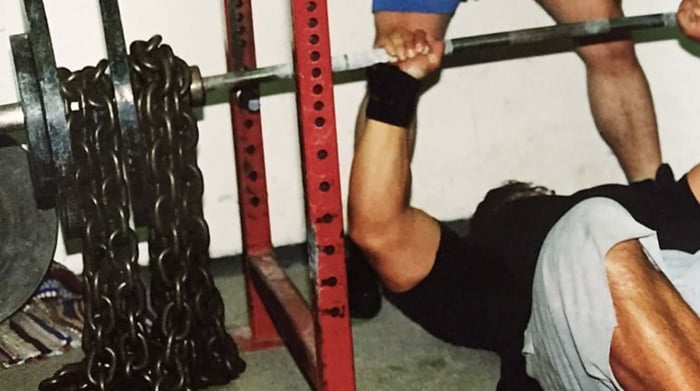
Understand the Difference
The first step to success with accommodating resistance is understanding the difference between band tension and chain weight. While both of these tools are used to apply resistance to the athlete, they do so in different ways. The elasticity of the bands results in an overspeed eccentric and accommodating resistance effect, while chain weight only accommodates resistance.
At Westside, we look at it as “live” tension and “dead” weight. When using bands, the bands' elasticity increases kinetic energy, requiring the athlete to exert greater eccentric force to keep the movement under control. Chains do not increase kinetic energy; they simply accommodate resistance throughout the range of motion.
In the powerlifting world, you will often hear athletes say that the bands create a sort of Smith machine effect, while chain weight will place a greater emphasis on balance and stability. For experienced athletes, this can be true. However, for beginners, the opposite is true.
When introducing accommodating resistance to a beginner-level athlete, it is often best to start with chains. This allows the athlete to experience the effects of accommodating resistance while avoiding potential technique breakdowns from unprepared exposure to overspeed eccentric training. For beginners, the chains will challenge stability in a constructive way, while the bands can cause severe breakdowns in technique and posture.
As you begin using accommodating resistance in training, make sure you understand the difference between bands and chains, and introduce their use in a way that matches the athlete's experience level.
Check Your Setup
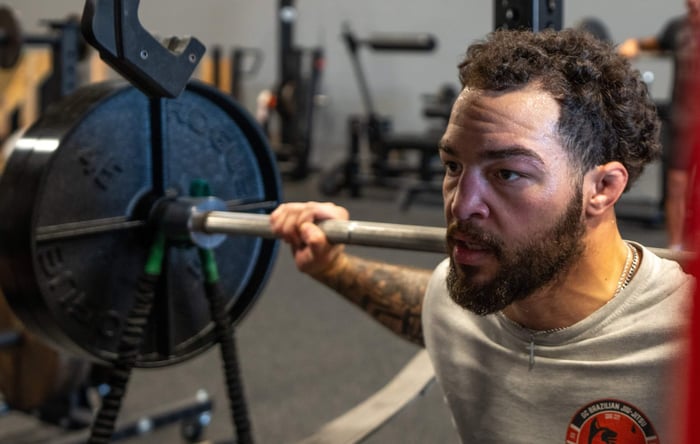
Once you know the difference between band tension and chain weight, it is time to put these tools to use. However, to do so effectively, these training tools must be properly connected to the barbell. This means that the bands remain at proper tension throughout the lift, and the chain weight unloads and loads onto the barbell properly.
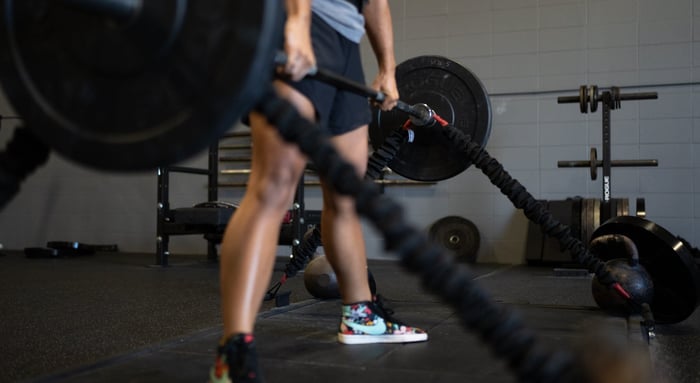
When using bands, the main thing we want to focus on is how we anchor them to the rack, platform, or floor. At Westside, we connect our bands to the barbell in a few different ways depending on the lift.
If we are performing a squat, we will loop the bands around the monolift tubing and a 4 x 4 block of wood to achieve proper tension. In the bench press, we use the pins attached to our bench to anchor the bands. When we use bands with the bench press, we halve the bands and wrap them around our anchor point, then attach both ends to the barbell.
With the deadlift, we will attach bands to the platform. However, how we do so will depend on the band being used.
With minibands or monster minibands, we will attach one end of the bands to the anchor point, lay the entire band over the bar, bring the band under the opposite anchor point, then stretch the band back over the barbell, attaching the looped end to the original anchor point.
If we are pulling against heavier band tension, we will simply connect the band to one anchor point, lay it over the barbell, and connect the other end to the opposite anchor point.
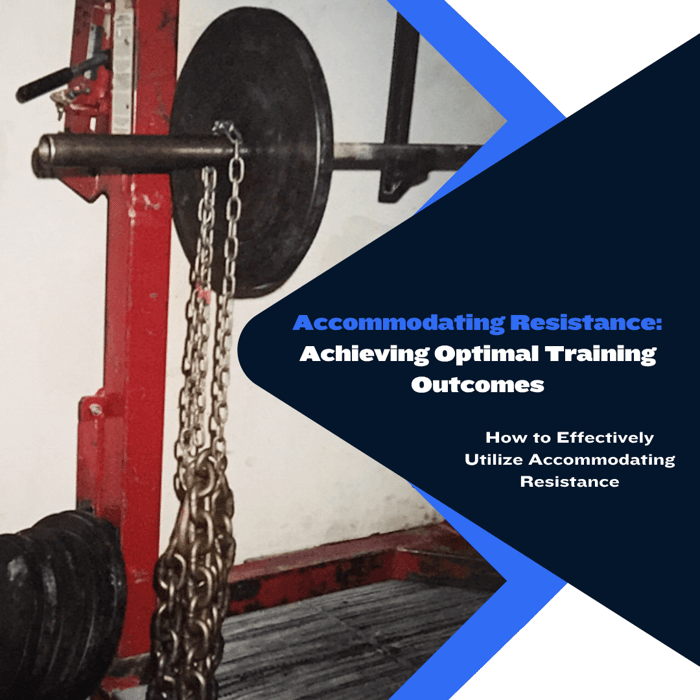
Attaching chains to a barbell is much simpler. The main focus is to suspend the chains so that only a few links are on the floor at lockout. We do this to ensure we are truly training with the chain weight attached to the barbell, not less weight, because the chains are already 25% unloaded before we even begin the movement.
One thing worth noting is the difficulty of using chains with the deadlift. If you pull conventional style, you will have to attach chains to the sleeves of the barbell. While this will work fine for one rep, the chains will begin to stack under the plates, causing the barbell to shift erratically during multi-rep sets.
Sumo-style pullers can load the chain onto the center of the barbell, allowing it to load and unload without stacking under the plates.
For this reason, it can be beneficial for conventional pullers to use chains for single-rep sets, but bands for multi-rep sets.
Programming Accommodating Resistance
Now that we know the difference between band resistance and chain weight, and how to properly attach each to a barbell, we can discuss how to incorporate these tools into a training plan. The Conjugate Method framework provides us with the opportunity to use accommodating resistance during our maximal, dynamic, or repeated effort training.
During our maximal effort training, we typically perform two maximal effort movements with accommodating resistance each month, one lower and one upper.
Accommodating resistance during maximal effort training targets the midpoint-to-lockout portion of a barbell lift. This results in athletes having to exert greater force at advantageous joint angles to avoid deceleration. This differs from training with a standard barbell setup, which results in deceleration as athletes achieve advantageous joint angles.
In a typical maximal effort lift, the greatest amount of force is required off the chest, off the floor, or out of the hole, depending on the lift. With accommodating resistance added, athletes are under less demand at disadvantageous joint angles and must exert greater force as advantageous joint angles are achieved.
This promotes proper acceleration under competition-relevant training intensity while also improving strength from the midpoint of a lift to lockout.
Dynamic effort training is where we most often use accommodating resistance. At Westside, we conduct two dynamic effort training days per week: one lower and one upper. Both of these training days will include the use of accommodating resistance.
When using bands, our athletes must contend with the overspeed eccentric effect, which increases the kinetic energy of the eccentric portion of the lift. This results in athletes having to exert greater levels of eccentric force to slow the barbell to the chest or squat box and then accelerate through the concentric portion of the lift to avoid deceleration as the band tension increases towards lockout.
As mentioned previously, chains accommodate resistance but do not provide an overspeed eccentric effect. However, we include chains in our dynamic effort training to help avoid excess fatigue or overuse injuries from constant band training.
Chains allow us to still accommodate resistance during our dynamic effort training while generally being less fatiguing than bands.
Often, we perform 1-2 waves with bands, then a wave of chains. This not only allows athletes to avoid fatigue-related issues but also prevents the “smith machine” effect caused by bands we discussed earlier, which can negatively affect balance in the standard barbell squat.
We can also include accommodating resistance in our repeated effort work. This could manifest as close-grip bench press versus bands as a primary accessory exercise, or dumbbell lunges with chains wrapped around the wrists as a secondary accessory exercise.
One example of an optimal way to use accommodating resistance during accessory work would be a banded Spoto press. The Spoto press already requires rapid deceleration,, which improves upper-body, torso, and arm tissue tolerance, as well as reversal strength. If we add bands into the equation, we only amplify the effects of the exercise.
There are no limits to how creatively a coach can include accommodating resistance into accessory work. We can use it to focus on lockout strength or to manage fatigue by altering the resistance curve of a specific exercise. Just be sure the movements make sense and that the accommodating resistance is loading and unloading optimally.
No matter whether we are performing a maximal, dynamic, or repeated effort exercise with accommodating resistance, we never want the accommodating resistance to fully unload from the barbell or implement. There should always be some chain left suspended, and the bands should never be so loose that they look like spaghetti noodles.