Table of Contents
The implementation of an effective training system is a critical factor in an athlete's success. No matter the sport, physical strengths and capacities must be improved to allow the athlete to surpass the competition and reach peak performance. However, not all training systems are created equally.
For a training system to be most productive, it must be able to rapidly build all the necessary strengths and capacities related to the athlete’s chosen sport. Additionally, the system must be efficient, given that athletes have only so much time per year to dedicate to strength and conditioning work. This is where Conjugate surpasses all other approaches to strength and conditioning training.
When utilizing the Conjugate Training System, we focus on two things: identifying the strengths and capacities needed to excel in the sport the athlete competes in and evaluating the athlete's current state to determine which capacities need the most focus.
Once we have this information, we can formulate a training plan specific to the athlete that allows rapid improvement in weak points while ensuring that all other aspects of performance improve as well. At Westside, our athletes do not regress because our system naturally prevents detraining.
How is this possible? Because we train all necessary aspects of strength and conditioning simultaneously. There are no phases, there are no training blocks, just consistent training that adjusts to the athlete's training needs, rate of recovery, and current schedule.
In this article, we will discuss the Westside perspective on the Conjugate Method.
It’s More than Geared Powerlifting
Any time our training methods are criticized, one of the first things you will hear is that the Conjugate Method and the Westside Barbell approach only apply to geared powerlifting. This is often an argument perpetuated by those with a limited understanding of the methods and who have not spent time at Westside Barbell.
While I am a powerlifter, one of my primary reasons for wanting to be at Westside was to learn from the best of the best, Louie Simmons. I thoroughly enjoy the sport of powerlifting; however, my primary focus has always been on the science and art of strength and conditioning. Who better to learn from than the man himself?
I was on Lou’s crew in the morning, where the focus was solely on powerlifting. However, I knew Lou worked with conventional sports athletes in the evenings. I asked for permission to attend some of these training sessions to observe and was granted the opportunity.
At the time, I had a great understanding of the Conjugate Method as it pertained to powerlifting. I had followed Lou’s teachings for years, and even before I was invited to Westside, all of my powerlifting success was a product of Lou’s methods. However, I knew there was more to the methods, as I had always heard about Lou’s work with athletes.
As I observed these sessions, I, of course, noticed similarities in the way the athletes trained compared to powerlifters. They used maximal, dynamic, and repeated effort training. However, the exercise selection, training volume, and frequency were a bit different.
After observing a few sessions, I asked Lou a few questions I had, and one of the perspectives he shared with me that changed how I looked at the methods was that it is a system, and within this system, there are no rules, just parameters.
What he meant was that, while we, of course, have to adhere to the specific aspects of maximal, dynamic, and repeated-effort training, how we do so should be dictated by the athlete we are working with, not by some rule of thumb. Athletes have to train at specific intensities, velocities, volumes, and frequencies, but how we organize training, select exercises, and manipulate the approach all depend on the individual and their chosen sport.
If there is one thing people really miss about the Conjugate Method, it is that it is a strength and conditioning operating system, not a geared powerlifting training method.
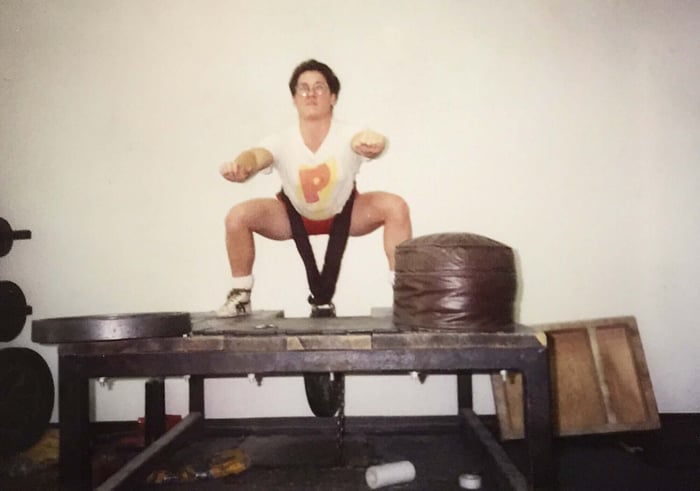
For instance, the box squat. This exercise is one of the most misunderstood exercises in all of strength and conditioning. If you ask the opinion of a fool, they will say Westside box squats because the box mimics the way powerlifting gear locks up at depth. If that’s the case, how come the box squat has helped both raw powerlifters and conventional sports athletes improve their lower-body absolute strength and explosive power?
I’ll tell you how. The box is the only means of achieving the relaxed-overcome-by-dynamic training effect. This allows us to briefly relax the lower body, then rapidly re-engage the lower body muscle groups to leave the box as quickly as possible and complete the squat. This leads to great improvements in rate of force development, starting strength, and reversal strength.
You will see some coaches say that raw lifters do not need to relax on the box and should only achieve a static position. In that case, why use a box at all? If I am going to have an athlete achieve a static-overcome-by-dynamic training effect, I would just have them perform pause squats.
Again, this small example shows how coaches and influencers tend to talk about things they don't understand and offer unnecessary solutions to problems that don’t exist. Then again, these types have a need to create content daily to stay relevant, so they’ll say nearly anything for likes and shares.
If you think Conjugate is limited only to geared powerlifting, you don’t know Conjugate.
Manipulating the System
Years ago, Lou introduced the strength and conditioning world to the Westside Barbell basic template, offering insight into how powerlifting groups trained. The basic template is still the most effective way to use Conjugate for strength-sport-focused athletes. However, it is important to realize what this is: a template.
This means that the coach or athlete must fill in the blanks depending on the athletes they are working with. What does filling in the blanks entail? Building optimal maximal effort exercise rotations, proper rotation of specialty bars, and accommodating resistance during dynamic effort training, and selecting appropriate accessory exercises based on the needs of each individual.
The Conjugate Training System is an operating system, and just as you can build a variety of apps on a computer operating system, you can build countless training plans that fit within the basic template. At Westside, we, of course, have favored approaches that we know work well based on history and results. However, this does not mean you should not learn to manipulate the methods to you and your athlete's advantage.
Successful strength and conditioning outcomes are not achieved by being a follower. While we have provided the blueprint for successful training, it is up to the coach or athlete to evaluate their athletes and design comprehensive training plans based on each athlete's needs and sporting goals.
Take our combat sports training crew, for example. Years ago, Tom was seeking a way to further optimize training to achieve optimal training results while working with UFC veteran and knockout artist Matt Brown. After talking with Lou, he found a different approach, and the three-day combined dynamic effort template was created.
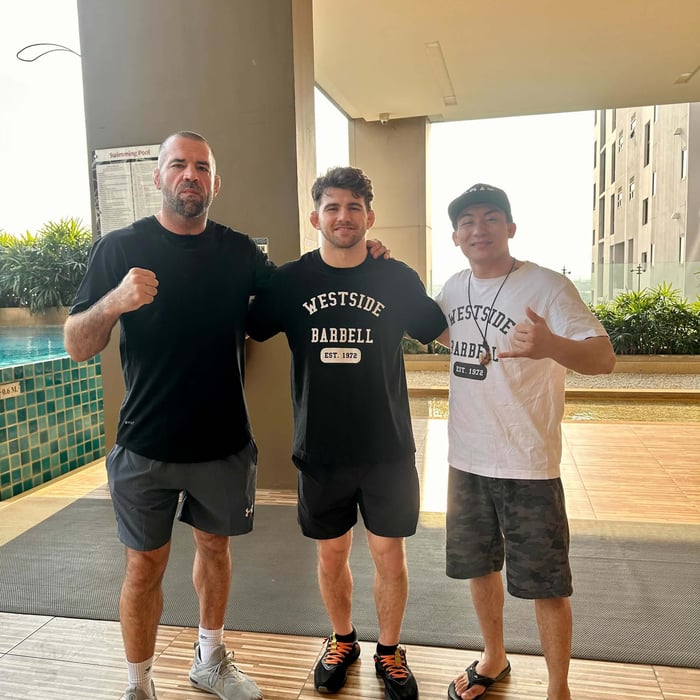
Today, the three-day combined dynamic effort approach continues to produce incredible results for athletes at the peak of their sport. Just last week, Dante Leon and Josh Perreira scored wins at ONE Fight Night 42, winning in impressive fashion.
These guys are direct products of the three-day combined dynamic effort approach, showing how the Conjugate System can be manipulated to produce optimal strength and conditioning outcomes in the most demanding sports. Our combat sports athletes attend sport-specific practices constantly, and the three-day system fits within their busy schedules without conflict.
Last I checked, Dante wasn’t wearing a bench shirt in the ring, and Josh didn’t deliver a 38-second spinning backfist knockout while wearing a squat suit. But Conjugate only works for geared lifting, right?
Learn to Effectively Wield the System
When a coach or athlete first discovers the Conjugate Method, the training system can be a bit overwhelming. This is particularly true if the individual lacks a solid foundation in strength and conditioning science. Our methods are entirely rooted in science, so if an individual does not understand the basics, it can become difficult to utilize the system to its fullest extent.
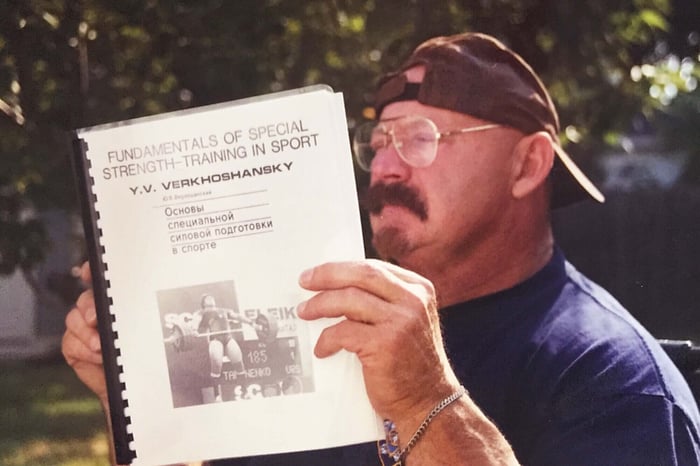
This is one of the reasons Lou was adamant about the need for constant reading and self-education. Our training system is heavily influenced by the discoveries and conclusions made by strength and conditioning greats such as Dr. Yuri Verkhoshansky, Dr. Vladimir Zatsiorsky, and Dr. Mel Siff. To ignore the works created by these individuals is to severely limit your ability to effectively use the Conjugate Method to your and your athlete’s greatest advantage.
Our training methods are also based on the years of field research and experience of the great Louie Simmons, who is no doubt the greatest contributor to Conjugate Method training theory and American strength and conditioning. While some attempt to deny this, look at the state of American strength and conditioning before and after Lou. The influence speaks for itself.
Aside from acquiring proper education and knowledge, coaches must learn to evaluate athletes correctly and design training plans accordingly. Again, the Conjugate Method is a strength and conditioning operating system; there are no rules, just parameters.
For instance, at Westside, we place great emphasis on hamstring development. Why? Because many of the athletes we have worked with arrive at the gym with posterior-chain weaknesses.
Does this mean that we ignore the development of the hips and quadriceps? Of course not.
As a coach, if you have an athlete who walks into the gym and can perform Romanian deadlifts with 500lbs, but struggles to front squat 315lbs, would you not prioritize anterior hip and quadriceps training? Learn to evaluate the athlete and make training decisions based on their needs.
Effective Conjugate Method training relies on the coach or athlete to understand both foundational strength and conditioning science and the full depth and breadth of the Conjugate Training System. If you can combine those two aspects, you can build effective programming for any athlete who walks into your facility.
A Complete Training System
The Westside Barbell Conjugate Training System has no holes in its game. We can make athletes stronger, faster, and better conditioned, and improve their overall physical composition. Name a strength and conditioning-based issue an athlete is facing, and we can no doubt build a comprehensive training plan to address and solve the problem.
Not only can the system address any situation or circumstance, but it can do so with incredible efficiency. Our methods allow for the simultaneous development and improvement of all relevant strengths and athletic traits, leading to gains in timeframes that other methods simply cannot match.
If there is one negative thing that can be said about Conjugate, it is that it can be unforgiving to the uninitiated coach or athlete. That is why Westside Barbell continues to exist today, to ensure all coaches and athletes have the ability to improve their understanding of the Conjugate Training System by consulting with individuals who have experience working directly under the great Louie Simmons.
If you think the Conjugate Method does not work for you or will not work for your athletes, I challenge you to reach out so we can provide consultation. To date, we have not experienced a situation where a coach or athlete has worked directly with us and failed to succeed with the methods. If you work directly with us, we will get you up to speed and dialed in.
There is only one place to learn the Conjugate Training System: Westside Barbell.