
Table of Contents
One System, Two Pro Lacrosse Athletes
Walk into Westside on a Monday at 10am and you will catch Ally Kennedy and Justin Inacio training next to each other. Ally is a midfielder for the Maryland Charm, a three time world champion with Team USA, and is heading into her WLL season.
Justin plays faceoff for the Carolina Chaos in the PLL and defense for the Calgary Roughnecks in the NLL. He is the all time Ohio State leader in faceoffs and ground balls. Two pro lacrosse careers, two different points in the competitive calendar. Similar program. Similar exercises. Same logic.
That is the part most people miss about conjugate. Lacrosse strength training done this way is not a list of lifts. It is a set of principles built on percentages, bar speed, and where the athlete sits today in their own strength curve. The barbell does not care about gender. It cares about load, velocity, and tension. When Ally and Justin work side by side, the layout of their week looks the same. The numbers on the bar are theirs.
What Lacrosse Strength Training Looks Like
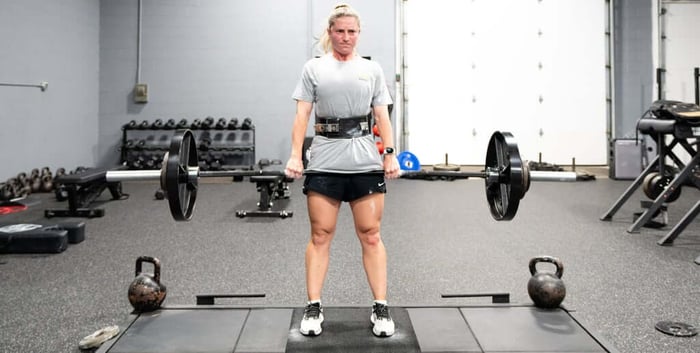
Both train at Westside three days a week. Agility and field running happens off site with another coach. That division of labor is on purpose. We own the strength, the power, and the work capacity.
Every session runs the same shape:
- General warm up
- Plyometrics paired with postural exercises
- Main lift, max effort one day and dynamic effort another
- Accessories built around the week's need
The warm up gets tissue temperature up and the nervous system online. The plyos teach the system to produce force fast. The postural work keeps the shoulders, hips, and spine doing what they are supposed to do under load.
On a max effort day we normally work up to a top end single. We aim for a number at high intensity that stresses the system without burying the athlete. On a dynamic effort day we move submaximal loads against accommodating resistance, focused on bar speed. Then accessories aimed at whatever the athlete needs that week. Posterior chain. Single leg. Trunk. Grip. Work capacity.
Ally runs it. Justin runs it. The structure holds. The selection flexes.
Why the System Travels
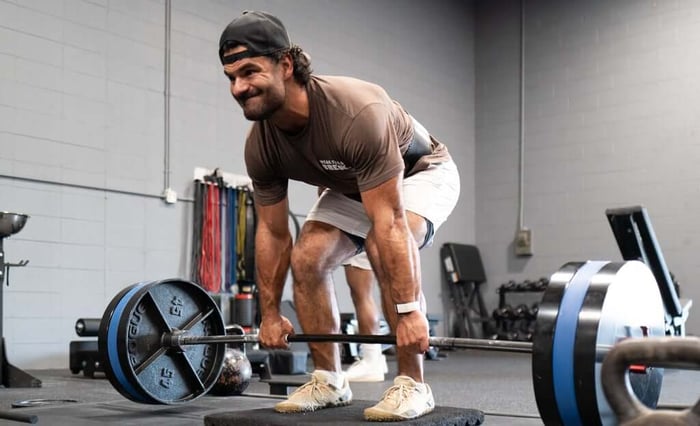
Conjugate works for both of them for the same reason it works for a powerlifter, an NFL lineman, or a PGA golfer. It is built on physics and biomechanics, not aesthetics. Max effort builds absolute strength. Dynamic effort builds rate of force development. The repetition method builds the supporting tissue. Every prescription comes out of a percentage of what the athlete can do right now.
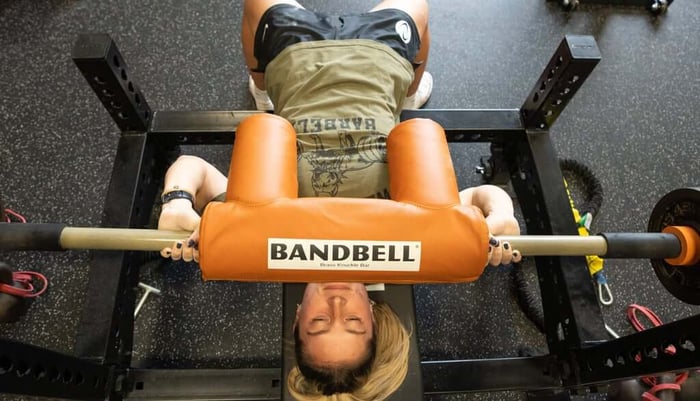
When Ally trains a max effort floor press, the bar weight is hers. When Justin trains a max effort floor press the bar weight is his. Same exercise, same intent, different load. The system scales because it is not fixed to one body or one sport. It is fixed to principles.
This is the part coaches miss when they program separately for male and female athletes by default. There are real differences in recovery, in volume tolerance, in soft tissue response. Those get addressed in the dosing and the accessory work. The framework itself does not change.
Different Seasons, Same Template
Where Ally and Justin diverge is in the competitive calendar. Lacrosse strength training flexes around that.
Ally is building toward the Maryland Charm season. Pre season is the time to push capacity and address weaknesses without the pressure of a game on the weekend. She runs all three days. Max effort upper, max effort lower, dynamic effort. We can be aggressive with intensity and sit in higher volume blocks because she has the runway.
Justin is in the thick of his competitive year. NLL into PLL is a long season window in pro sports.
For him, two max effort days plus dynamic effort is too much during games. So we adjust. Dynamic effort stays, volume will adjust. Depending on his schedule, the second day becomes a heavy upper instead of a true max effort. The intent does not change. The intensity comes down on one day so we are not stacking a heavy lower on top of game day. The point is to hold capacity, keep him robust, and keep his tissue healthy through numerous face offs and games on opposite ends of the continent.
This is where the conjugate system earns its keep. We can talk to the athlete that morning, see how the body is moving, see what the week has cost them, and adjust the workout while still making progress through the season. Same template. Different dosing. Different selection on the day.

The Work Outside the Gym

What gets missed at this level is what happens after the athlete leaves the gym. With Ally, that piece is especially worth talking about. The diet is dialed. The right doctors and physical therapists are in her corner. Sleep gets protected. Recovery gets the same attention as training. She walks in ready to learn and ready to be coached.
That level of sacrifice is the part of being a pro that nobody sees and nobody hands out a trophy for. Ally does not chase the limelight. She lets her game speak for itself, and the results follow. For the next generation of athletes coming up behind her, that is the blueprint. Training is one piece of being a pro. The rest happens in the choices made between sessions.
This is why there is no women's program and no men's program at Westside. There is a system, and there are athletes who hold themselves to its standard. Ally and Justin train next to each other because the principles do not change when the athlete does. The bar weight changes. The volume changes. The math stays the same.
FAQs
What is the difference between max effort and dynamic effort training?
Max effort means working up to a top end single or triple at the highest weight the athlete can move with good mechanics that day. It builds absolute strength. Dynamic effort means moving submaximal loads as fast as possible, often against bands or chains. It builds rate of force development and bar speed. Both are core to conjugate.
Frequently Asked Questions
What is the conjugate method for lacrosse?
The conjugate method is a system built around rotating max effort, dynamic effort, and repetition method work week to week. Applied to lacrosse, it lets us train absolute strength, rate of force development, and tissue capacity at the same time without overtraining any one quality. Every prescription comes off a percentage of the athlete's current strength, so the system scales to the player in front of us.
How many days a week should a lacrosse player strength train?
For pro lacrosse athletes at Westside, the answer is three days a week in the weight room. Agility and on field running happen separately. Three days gives us enough exposure to drive adaptation across max effort, dynamic effort, and accessory work, while leaving the rest of the week open for practice, games, and recovery.
Can male and female lacrosse players follow the same strength program?
Yes. The conjugate system is built on physics and biomechanics, not on gender. Loads are prescribed as a percentage of the athlete's own strength, so the bar weight is always individual. Real differences in recovery and volume tolerance get addressed in dosing and accessory selection. The framework does not change. Ally Kennedy and Justin Inacio train side by side at Westside under this exact setup.
How should lacrosse strength training change during the season?
In season, we drop volume and intensity to avoid stacking training cost on top of game cost. Dynamic effort stays in to maintain power. A second max effort day often becomes a heavy upper instead of a true max so we are not loading the lower body before competition. Pre season, the full three day rotation runs with more aggressive intensity because the athlete has the runway to recover.
Special Strength Development for All Sports eBook by Louie Simmons

$5.00
Louie Simmons' magnum opus on the Westside Conjugate Method for athletes in any sport. Combines the former Soviet Union system, the Bulgarian system, and four decades of Westside research into a single 390-page volume. This is the book Louie spent… read more